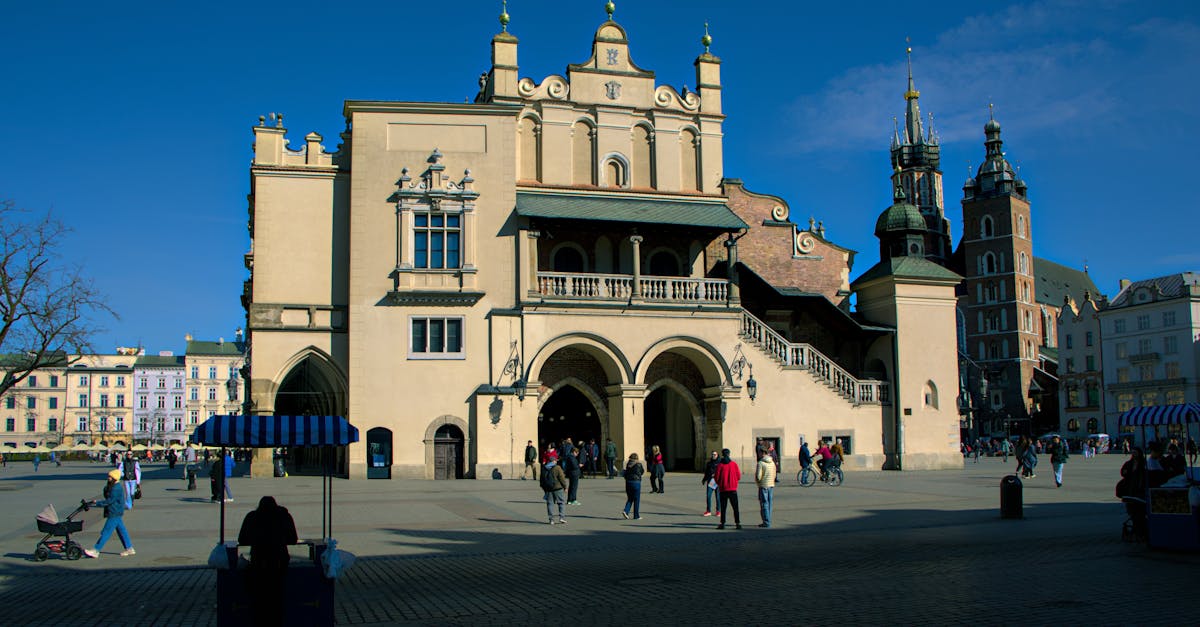
Explore the historic and vibrant architecture of Kraków's Market Square, a cultural hub.
UM flag
UM
PL
PL flag

Photo: Piotr Kalinowski · Pexels

Can an U.S. Minor Outlying Islander traveller move to Poland with family?

Recent change · Oct 2025

Schengen EES (Entry/Exit System) is now operational

All non-EU travellers entering the Schengen area now have biometrics (fingerprints + facial photo) registered at the border on first entry. Adds 5–15 minutes to your border crossing on first arrival; subsequent crossings within 3 years use the stored data.

Most U.S. Minor Outlying Islander travellers go through the embassy or consulate before they travel when heading to Poland for partner / family.

The route most travellers use is the Polish Citizenship Confirmation by Descent. Stays of up to 9999 days, expect to pay around PLN 244 in mandatory fees, processing usually takes 180–720 days.

The paperwork is heavy — approval depends heavily on the documents and circumstances you can show.

Straight from gov.pl.

Partner / Family visas have major life consequences.

Long-stay visa decisions affect your right to live, work, study, or remain with family. Always verify with a qualified immigration adviser or the destination's embassy before making travel, employment, or relocation decisions.

Embassy visaPartner / Family

Polish Citizenship Confirmation by Descent

Max stay
9999days
Processing
180–720days
Fee
PLN 244.00≈ $67.81
Difficulty2/10·Realism7/10
Why? ▾

Difficulty

Heavy paperwork
2/10

Lots of documentation, eligibility thresholds, or a sponsor required. Start months ahead and consider professional advice.

Why this score?
  • Embassy/consulate visa application
  • -2Long processing time (up to 720 days)
  • -1Long documentation list (7 items)

Approval realism

Approval depends on you
7/10

Approval depends heavily on the documents and circumstances you can show. Read the warning above — it points to what tends to move the needle.

What drives this score?
  • Embassy visa applications generally succeed when documentation is complete and ties to home are clear
Step-by-step checklist

Your application checklist

  1. 1

    Check your passport validity

    1110+ days before

    Most countries require 6+ months of validity beyond your travel dates and at least one blank page. If it's close, renew before applying.

  2. 2

    Gather supporting documents

    1094+ days before

    You'll need: Have a Polish-citizen ancestor who emigrated AFTER 1920 (most common), AND who did NOT lose Polish citizenship; Polish citizenship laws of 1920, 1951, and 1962 each had different loss provisions — Polish military service in a foreign army before 1951 was a typical loss event; Apostilled documents for every ancestor in the chain (birth, marriage, military, naturalisation); If documents are in archives in Poland, the consulate / Voivode office can request them; and others (see full list above).

  3. 3

    Submit the application to the embassy or consulate

    1080+ days before

    In person at the consulate with jurisdiction over your residence. Bring originals + photocopies of every document. Most consulates require a prior appointment.

  4. 4

    Track the application; print the approval

    7+ days before

    Decisions typically take 180–720 days. Print or save a clear PDF of the approved visa — airlines check this at check-in.

  5. 5

    On the day of travel

    day of travel

    Carry: passport (printed visa if applicable), onward ticket, proof of accommodation, proof of funds, travel insurance. Border officers retain discretion regardless of visa status.

Show full requirements, fees, and source
Passport valid 6+ months

What you need

  • Have a Polish-citizen ancestor who emigrated AFTER 1920 (most common), AND who did NOT lose Polish citizenship
  • Polish citizenship laws of 1920, 1951, and 1962 each had different loss provisions — Polish military service in a foreign army before 1951 was a typical loss event
  • Apostilled documents for every ancestor in the chain (birth, marriage, military, naturalisation)
  • If documents are in archives in Poland, the consulate / Voivode office can request them
  • Procedure: 'confirmation of Polish citizenship' (Voivode), not naturalisation — you're declared to have ALWAYS been Polish if eligible
  • Karta Polaka — separate from citizenship, gives many benefits for Polish-heritage applicants who can't fully document the chain
  • On confirmation: full Polish + EU citizenship

Fee breakdown

  • Voivode application fee + apostilles + translations (typical total)PLN 244.00≈ $67.81
View primary source (gov.pl)

What you'll need

Partner / Family visa for Poland

Specific to U.S. Minor Outlying Islander passport holders.

Start ~0–12 weeks before your intended travel date.

Order these first — they have the longest lead time

  • Police certificate

    Background2–12 weeks

    A criminal-record clearance from every country you've lived in for 6+ months in the past 10 years. Universally required for work, study, family and PR routes.

    How: FBI Channeler (US), ACRO (UK), AFP National Police Check (AU), state police of each country lived in.

  • Valid passport

    Identity2–8 weeks

    Most countries require your passport to be valid for at least six months beyond your departure date, with two or more blank pages.

    How: Renew via your own country's passport office if expiring within 12 months.

  • Evidence of genuine relationship

    Relationship2–4 weeks

    Joint financial accounts, lease/mortgage in both names, photos across the relationship, communication logs, statements from family/friends — every modern partner visa requires this.

    How: Self-compile over time. Most routes want 12+ months of co-habitation evidence; some accept communication-only for long-distance.

  • Medical examination

    Medical1–4 weeks

    Conducted by a panel physician approved by the destination's immigration authority. Includes chest X-ray, blood tests, and an interview.

    How: Book directly with a panel physician — find them on the destination's immigration website.

  • Apostille / certified document copies

    Credentials1–4 weeks

    Hague Apostille on civil documents (birth, marriage, education certificates) for countries that recognise the convention. Other countries require consular legalisation instead.

    How: US: state Secretary of State or US State Dept. UK: FCDO Legalisation Office. Other: ministry of foreign affairs of the issuing country.

Then gather these

  • Marriage / civil-partnership certificate

    Relationship1–4 weeks

    Original or certified copy of the marriage or civil-partnership registration, apostilled if applicable.

    How: Issuing registry office of the country where the marriage was registered.

  • Birth certificate (and children's)

    Relationship1–4 weeks

    For family and dependent-child routes. Original or certified copy, apostilled if applicable.

    How: Vital records office of the country of birth.

  • Biometrics (fingerprints + photo)

    Background1–4 weeks

    Captured at a Visa Application Centre (VFS, BLS, TLScontact). Walk-in is rarely possible — appointment slots fill up.

    How: Book on the VAC website after submitting your online application.

  • Sponsor's income evidence

    Financial1–3 weeks

    Last 6–12 months of payslips, employment letter, or tax returns from the citizen-sponsor in the destination country.

    How: Sponsor supplies. Tax returns may need an IRS / HMRC / CRA transcript, which takes a few weeks to order.

  • Certified translation of documents

    Credentials1–2 weeks

    If your documents are not in the destination's official language, you may need a sworn or certified translator.

    How: ATA-certified (US) / ITI-qualified (UK) translators, or a sworn translator registered with the destination's consulate.

  • Proof of funds (long-stay)

    Financial1–2 weeks

    Country-specific minimum savings — e.g. ~CAD 14,000 (Canada study/work permits, single applicant), ~£1,334/month + £8,000 reserve (UK family), proof of income for digital-nomad routes.

    How: Bank statements going back 3–6 months, sometimes a sworn affidavit of support from a sponsor.

  • Passport-style photograph

    Identity1–3 days

    A recent biometric photo to the destination's specifications. Most consulates require their own dimensions, not your home country's.

    How: Any high-street photo studio, or app-based services that meet ICAO 9303 spec.

  • Online visa application form

    Application1–3 days

    The destination's online form (DS-160 for US, gov.uk for UK, IRCC portal for Canada, ImmiAccount for Australia, e-Visa portal for most others).

    How: Apply directly on the destination government website — never via a third-party paid service.

  • Application fee payment

    Application1 day

    Payable to the destination government directly. Fees range from ~$25 (e-Visas) to $2,500+ (US EB-1).

    How: Card payment on the destination's portal. Receipt required for the application.

Lead times are global averages. Country-specific channels can be faster (FBI Channeler in days vs FBI Mail in months) — always check the destination's embassy or visa portal for current timelines.

Make your case

Free guidance for your partner / family application

The same things a £1,000 immigration consultation would tell you — what evidence caseworkers actually weight, a personal-statement skeleton you can adapt, common mistakes that get applications refused, and when it's worth hiring a lawyer.

What caseworkers actually weight

  1. 1

    Genuine, subsisting relationship evidence

    The single biggest fraud signal caseworkers watch for is a relationship of convenience. Spread of evidence across financial, household, social and communication dimensions matters more than volume in any one category — 30 photos and nothing else is weaker than 5 photos + joint tenancy + joint bank statements + WhatsApp logs across the entire relationship.

  2. 2

    Financial-requirement compliance

    The sponsor's income / savings test is binary — you meet it or you don't. Most refused partner-visa applications fail here before the caseworker even reads the relationship evidence. Calculate the threshold for your destination + visa class precisely; UK's £29,000 minimum-income rule has hard-coded ways of evidencing salary, self-employment, savings, and pension income — they don't substitute freely.

  3. 3

    Personal statement / letter of intent

    A clear, dated narrative of how you met, when the relationship became serious, the major milestones (moving in together, engagement, marriage), and your plans for the destination is the caseworker's roadmap through the evidence bundle. A confused or contradictory statement does damage that strong evidence can't fully undo.

  4. 4

    Police certificates from every long-term residence

    Missing one police certificate from a country you lived in 6+ months sets the application back 8–12 weeks. They're the slowest-to-obtain document — start them on day one.

  5. 5

    Medical exam (when required)

    Many destinations only require a medical for relationships forming in TB-prevalent regions. Check the destination's TB-test country list; if you're on it, book the panel physician early — 4–6-week waits in major cities.

Personal-statement skeleton

Fill in each section with your own facts, dates, and details. The structure mirrors what caseworkers expect to find.

  1. 1. How we met

    Date, place, context. Were you introduced by friends / family / app / work / study? Lead with concrete dates. 'In March 2022, we met through a mutual friend at her birthday in London' beats 'we met through friends a few years ago' every time.

  2. 2. How the relationship developed

    First few months: how often did you meet? What did you do together? When did you decide you were a couple? When did your families first meet? Caseworkers want a TIMELINE, not just a feeling — annotate dates.

  3. 3. Cohabitation and shared life

    When did you move in together? What's the address? Whose name is on the tenancy / mortgage? What bills are in joint names? Who pays what? Cover ANY long-distance periods explicitly — they're not disqualifying as long as you can show communication and visits.

  4. 4. Big milestones — engagement, marriage, kids

    Date, location, who attended. If parents / siblings travelled to be there, name them. The detail signals authenticity.

  5. 5. Why we want to live in [destination]

    Job offer? Family ties? Existing residency right? Education? Be SPECIFIC about what you'll do in the destination — vague 'we want to build our life there' is weaker than 'I have a Skilled Worker job offer from Company X starting June' or 'my partner's parents are in [city] and need care.'

  6. 6. Long-term intent

    A line on your intent to live together in the destination long-term, raise a family, contribute economically, etc. Match the language to the destination's policy framing — UK 'genuine and subsisting', Canada 'bona-fide marriage', etc.

Tip: paste this skeleton into Claude or ChatGPT with your specific facts — the AI will turn rough notes into a tightly-structured statement caseworkers expect.

Mistakes that cost real money

  • Don't pay for translations of documents already in the destination's official language — many applicants over-translate. Check what's mandatory.
  • Police certificates: use the FAST channel (FBI Channeler / ACRO Premium / AFP urgent) for ~$20-50 extra rather than the standard mail-in route that can take 8-12 weeks; missing a visa appointment because your police check was delayed costs far more.
  • If your sponsor's income is just below the threshold, savings can substitute (UK: £62,500 of savings = £29k income equivalent). Combining sources is permitted in narrow ways — get this right before paying the application fee.
  • Don't pay for a translation of WhatsApp / iMessage screenshots in English to the destination's English-speaking immigration service. People do this.
  • Time your application to your visit, not to a deadline — most partner visas are valid 30 days from issue. Apply too early and you'll re-pay if you can't enter in time.
  • Premium / priority processing is rarely worth it for partner visas (a few extra weeks) but often worth it for student / Skilled Worker visas with semester / contract start dates.

DIY or hire a lawyer?

✓ DIY is fine if

  • First-time application, no prior immigration history, English-speaking destination, sponsor meets the income test cleanly, no children from previous relationships, no criminal history on either side
  • Re-applying after a refusal where the refusal reason was a clearly fixable document gap
  • Renewal applications where nothing material has changed

⚠ Get a specialist if

  • Prior visa refusal or immigration violation on either side (overstays, deportations, false-statement findings)
  • Criminal record (any) on the applicant's side — destinations interpret rehabilitation periods differently
  • Complex sponsor finances (mixed self-employment + employment, recent job change, business owner, overseas income)
  • Same-sex relationship to a destination where local recognition is uncertain (UAE, Saudi Arabia, much of Africa) — a specialist understands the workarounds
  • Dependent children from a prior relationship, especially across multiple jurisdictions
  • Adult Dependent Relative (UK), Parent Sponsorship (CA), Caregiver routes — exceptionally complex evidence requirements
This guidance is general — not legal advice. For high-stakes routes (refusal history, criminal record, complex finances), spend the money on a qualified immigration adviser regulated by your destination (UK: OISC / SRA; AU: MARA; US: bar-admitted attorney).

Email me if Poland's policy changes

ONE email when the rules change for U.S. Minor Outlying Islander travellers. No account, no marketing.

Other visa types for this route

We also have data on these visa categories between UM and PL.

Sources & references

Every link below is a primary government source. We aggregate; the source is the authority. If anything on this page disagrees with a link below, the link wins.

Sponsored

While you're sorting your trip to Poland

We earn a small commission on bookings made via these links — it helps keep the visa tool free. The visa info above is independent of any partner. Our commercial policy →

Browse other destinations

Where can U.S. Minor Outlying Islander passport holders go?

Other passports visiting Poland

Who needs a visa for Poland?

Informational only. A valid visa permits entry subject to officer discretion at the border. Always verify with the destination's embassy or official source before travel, employment, or relocation.