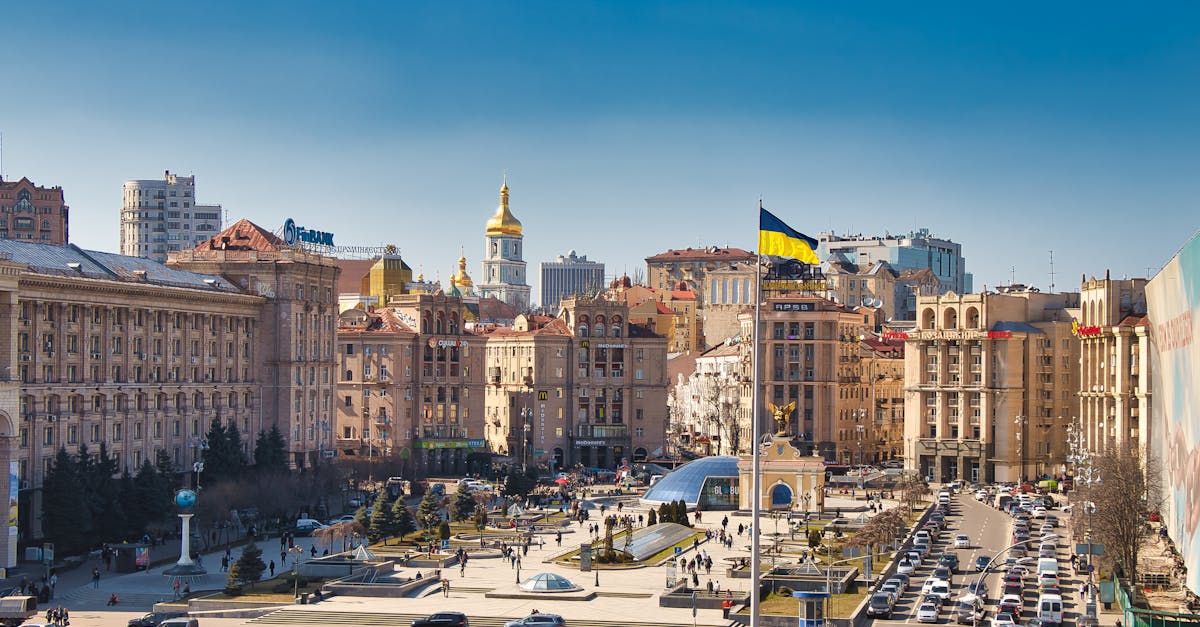
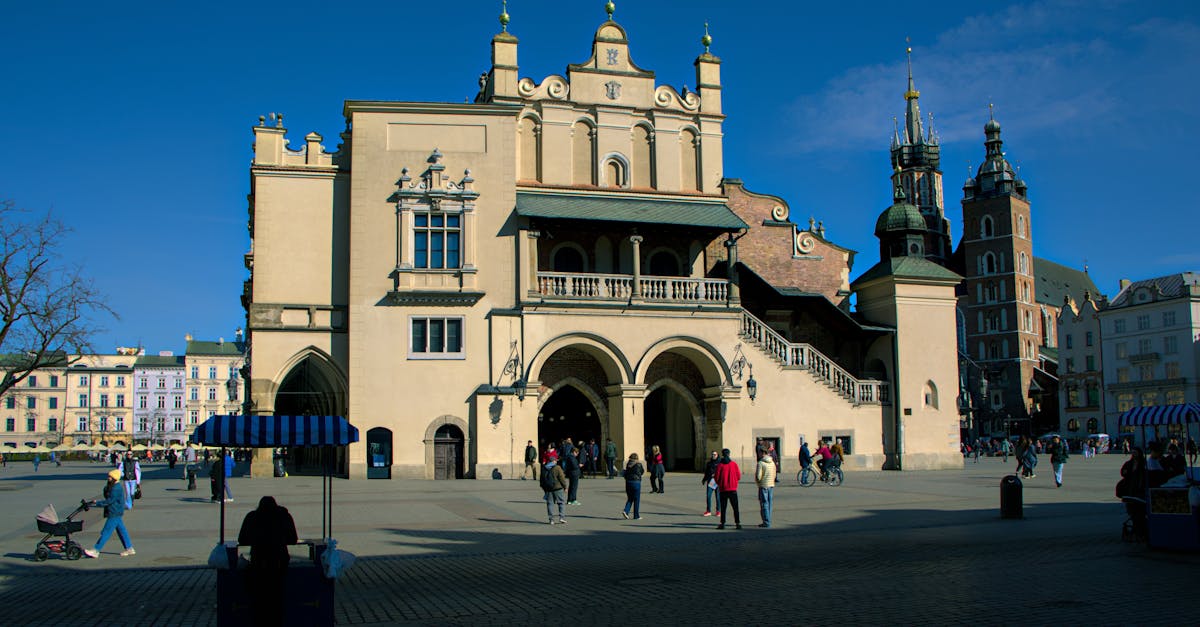


Photos: Nextvoyage, Piotr Kalinowski · Pexels
Can an Ukrainian traveller work in Poland?
Schengen EES (Entry/Exit System) is now operational
All non-EU travellers entering the Schengen area now have biometrics (fingerprints + facial photo) registered at the border on first entry. Adds 5–15 minutes to your border crossing on first arrival; subsequent crossings within 3 years use the stored data.
We don't yet have a verified record for Ukrainian travellers heading to Poland for work. The links below take you straight to Poland's embassy and official immigration portal — the authoritative answer lives there.
Work visas have major life consequences.
Long-stay visa decisions affect your right to live, work, study, or remain with family. Always verify with a qualified immigration adviser or the destination's embassy before making travel, employment, or relocation decisions.
Work from Ukrainian to Poland
We don't have a structured visa record for this exact route yet. Until we do, the authoritative answer lives on Poland's government portal — linked below. Look for the work permit / employment visa section.
1. Poland — official visa portal
gov.pl — visas
www.gov.pl/web/diplomacy/visas-and-passports
2. Ukraine foreign-affairs ministry
Useful for documents, apostille, and travel advisories from your own government.
3. General travel-advisory dashboards for Poland
The four major English-language advisory services. They publish current safety guidance independently of visa policy and update on a rolling basis.
What you'll need
Work visa for Poland
Specific to Ukrainian passport holders.
Start ~0–13 weeks before your intended travel date.
Order these first — they have the longest lead time
Employer sponsorship / CoS
Purpose evidence2–13 weeksA Certificate of Sponsorship (UK), Labour Market Impact Assessment (Canada), Form I-129 (US H-1B), or equivalent. The sponsor obtains this; you receive a reference number.
How: Your employer applies to the destination's immigration authority. You can't start without their reference number.
Police certificate
Background2–12 weeksA criminal-record clearance from every country you've lived in for 6+ months in the past 10 years. Universally required for work, study, family and PR routes.
How: FBI Channeler (US), ACRO (UK), AFP National Police Check (AU), state police of each country lived in.
Education credentials evaluation
Credentials4–12 weeksWES (Canada/US), ECE, IQAS, UK ENIC, or the destination's local equivalent — converts your foreign degree to the local framework.
How: Order online; allow 4–10 weeks. Request your university to send transcripts directly to the assessor.
English- / language-proficiency test
Credentials3–9 weeksIELTS, TOEFL, PTE, DELE, TestDaF, JLPT — depending on the destination. Most have minimum scores per visa class.
How: Book on the test provider's site. Test slots typically 2–4 weeks out; results 5–15 days after the test.
Valid passport
Identity2–8 weeksMost countries require your passport to be valid for at least six months beyond your departure date, with two or more blank pages.
How: Renew via your own country's passport office if expiring within 12 months.
Medical examination
Medical1–4 weeksConducted by a panel physician approved by the destination's immigration authority. Includes chest X-ray, blood tests, and an interview.
How: Book directly with a panel physician — find them on the destination's immigration website.
Apostille / certified document copies
Credentials1–4 weeksHague Apostille on civil documents (birth, marriage, education certificates) for countries that recognise the convention. Other countries require consular legalisation instead.
How: US: state Secretary of State or US State Dept. UK: FCDO Legalisation Office. Other: ministry of foreign affairs of the issuing country.
Then gather these
Biometrics (fingerprints + photo)
Background1–4 weeksCaptured at a Visa Application Centre (VFS, BLS, TLScontact). Walk-in is rarely possible — appointment slots fill up.
How: Book on the VAC website after submitting your online application.
CV / résumé and work history
Purpose evidence1–3 weeksUp-to-date résumé covering at least your last 10 years of employment. Some routes (Canada Express Entry, Australia points) require reference letters with hours per week.
How: Self-prepared. Get reference letters from past employers on letterhead, signed.
Signed job offer
Purpose evidence0–2 weeksA signed contract or offer letter from a sponsoring employer. Required for every work-route visa worldwide.
How: Issued by the sponsoring employer once you've accepted.
Certified translation of documents
Credentials1–2 weeksIf your documents are not in the destination's official language, you may need a sworn or certified translator.
How: ATA-certified (US) / ITI-qualified (UK) translators, or a sworn translator registered with the destination's consulate.
Proof of funds (long-stay)
Financial1–2 weeksCountry-specific minimum savings — e.g. ~CAD 14,000 (Canada study/work permits, single applicant), ~£1,334/month + £8,000 reserve (UK family), proof of income for digital-nomad routes.
How: Bank statements going back 3–6 months, sometimes a sworn affidavit of support from a sponsor.
Passport-style photograph
Identity1–3 daysA recent biometric photo to the destination's specifications. Most consulates require their own dimensions, not your home country's.
How: Any high-street photo studio, or app-based services that meet ICAO 9303 spec.
Online visa application form
Application1–3 daysThe destination's online form (DS-160 for US, gov.uk for UK, IRCC portal for Canada, ImmiAccount for Australia, e-Visa portal for most others).
How: Apply directly on the destination government website — never via a third-party paid service.
Application fee payment
Application1 dayPayable to the destination government directly. Fees range from ~$25 (e-Visas) to $2,500+ (US EB-1).
How: Card payment on the destination's portal. Receipt required for the application.
Make your case
★ Hand-written for this routeTailored guidance — Ukrainian applying for a work visa to Poland
The same things a £1,000 immigration consultation would tell you — what evidencePoland's caseworkers actually weight, a personal-statement skeleton you can adapt to Poland's framing, common mistakes that get ukrainian applications refused, and when it's worth hiring a lawyer.
What caseworkers actually weight
- 1
PESEL UKR Temporary Protection — the dominant Ukrainian pathway since March 2022
Following Russia's February 2022 invasion, Poland implemented EU Council Directive 2001/55/EC granting Ukrainians 'Temporary Protection' (Ochrona czasowa). Initially called UKR status, formalised via PESEL UKR registration at any Polish municipal office (urząd gminy). Status currently extended until 4 March 2026 (EU-wide decision). Grants: full work rights without separate work permit, access to public healthcare (NFZ), education, social benefits including 800+ program (child benefit), and free residence card issuance. Apply at any urząd gminy with Ukrainian passport — typically same-day PESEL number issued.
- 2
Karta Pobytu (Residence Card) for longer-term Ukrainian residents
Beyond Temporary Protection, Ukrainians can apply for Karta Pobytu (residence card) on standard grounds: Tymczasowy Karta Pobytu (Temporary Residence — 3 years renewable) tied to work / family / study / Pole's Card (Karta Polaka), or Stała Karta Pobytu (Permanent Residence) after 5+ years legal residence including UKR period (case law evolving — confirm with Polish lawyer). The Tymczasowy Karta is typically tied to a Zezwolenie na pracę (work permit type A) granted on employer application via voivode (wojewoda).
- 3
Karta Polaka — fastest route to settlement for Polish-heritage Ukrainians
Western Ukrainians (Lviv, Ivano-Frankivsk, Ternopil oblasts, Galician roots) often qualify for Karta Polaka under the 2007 Karta Polaka Act — requires documented Polish ancestry (grandparent or great-grandparent), basic Polish language, and connection to Polish culture. Karta Polaka holder gets: free long-term visa, free residence card, full work rights, free education, partial social benefits, and 6-month fast-track to Polish citizenship after Karta Pobytu Stałego (which is itself granted to Karta Polaka holders after 1 year of residence). Apply at Polish consulate Lviv, Lutsk, Kyiv, Kharkiv, Odessa (when consulates are operational).
- 4
ZUS social-security registration + Ukrainian-Polish credential mapping
Once employed, you're registered with ZUS (Zakład Ubezpieczeń Społecznych) social insurance — contributions 9.76% pension + 1.5% invalid pension + various smaller funds (employer pays ~20% additional). NFZ health insurance follows automatically. Ukrainian education credentials: Bachelor's (бакалавр), Specialist (спеціаліст), Master's (магістр) recognised under the 1996 Lisbon Recognition Convention which both countries signed. For regulated professions (medicine — лікар, nursing — медсестра, engineering — інженер), nostrification (nostrifikacja) at Polish ministry — 6-12 months process. Ukrainian medical doctors face Polish Medical Chamber (Naczelna Izba Lekarska) verification + Polish language requirement.
Personal-statement skeleton
Fill in each section with your own facts, dates, and details. The structure mirrors what caseworkers expect to find.
Status choice — Temporary Protection (UKR) vs Karta Pobytu vs Karta Polaka
Most Ukrainians use UKR Temporary Protection (fastest, easiest, free, until March 2026). Karta Polaka is best if you have Polish ancestry. Karta Pobytu Tymczasowy is best if you have stable long-term employment and want to build toward permanent residence and eventual citizenship. State which route, why, and what evidence supports it (Ukrainian passport for UKR; ancestry documents + Polish language for Karta Polaka; work contract for Karta Pobytu).
Polish work plan — employer / sector / city
Ukrainian work permits are tied to specific employer and role. Document: Polish employer name + NIP/REGON, role, salary in PLN (Polish living wage 2024: ~PLN 4,300 gross/month for full-time), city (Warsaw / Kraków / Wrocław / Gdańsk / Poznań / Lublin / Rzeszów — last three have largest Ukrainian diaspora). Sectors with strong Ukrainian recruitment: construction, logistics, manufacturing, agriculture, hospitality, IT (in Warsaw / Kraków / Wrocław tech hubs), healthcare (nursing assistants, after Polish nostrification for full nurse role).
Family situation — children's school, ZUS, NFZ
Many Ukrainian families remain in Poland under UKR status. State: spouse status (also UKR, or working with separate Karta Pobytu), children's age and school enrolment (Polish state schools accept UKR-status children free with ZUS-issued PESEL), elderly dependants if any (parents over 60 are eligible for UKR with full healthcare). For children, mention Polish language acquisition progress and any Ukrainian Saturday school participation.
Long-term plan — return to Ukraine, Polish citizenship, or onward EU
Polish citizenship after 3 years Karta Pobytu Stałego (which is itself after 5 years tymczasowy) — total ~8 years residence, with B1 Polish language requirement. Karta Polaka holders fast-track to citizenship in ~2 years after Karta Pobytu Stałego. Some Ukrainians intend to return to Ukraine after war ends; others plan onward EU mobility via Polish citizenship. State your honest plan — Polish authorities don't penalise return intent under Temporary Protection.
Mistakes that cost real money
- UKR Temporary Protection registration is FREE at any urząd gminy — bring only your Ukrainian passport; same-day PESEL UKR number, free residence document
- Free Polish language courses for UKR-status Ukrainians at municipal language schools (urząd gminy) and at NGOs like Caritas Polska, Polski Czerwony Krzyż, Fundacja Ocalenie, Fundacja Polskie Forum Migracyjne
- 800+ program (child benefit) is PLN 800/month per child under 18 — apply at ZUS office with Ukrainian birth certificate translated + PESEL UKR
- Free public healthcare (NFZ) for UKR-status — including dental for children (very rare in EU); register with any GP (lekarz rodzinny) using your PESEL UKR
- Don't pay 'visa agents' PLN 1,500-3,000 for UKR Temporary Protection — it's free at urząd gminy and the registration is straightforward; only Karta Polaka or complex Karta Pobytu cases may benefit from licensed adwokat help
- Karta Polaka application is free at Polish consulates in Ukraine (when operational) — don't pay private 'ancestry research' agencies UAH 30,000-100,000 unless your family records are genuinely lost
- NFZ-funded medical translation services at many hospitals — Ukrainian-Polish translators available free of charge
- ZUS social insurance contributions match other Polish workers (no Ukrainian-specific deductions) — full pension/healthcare/family benefit entitlement applies
DIY or hire a lawyer?
✓ DIY is fine if
- • PESEL UKR Temporary Protection registration at any urząd gminy
- • Standard work-permit-backed Karta Pobytu Tymczasowy via cooperating Polish employer
- • Karta Polaka application at Polish consulate when ancestry documents are clear (great-grandparent or grandparent Polish birth certificate + Polish-language basics)
- • Family member family-reunification within Poland (spouse + children of UKR-status primary)
- • Renewal of UKR status (automatic until 4 March 2026)
⚠ Get a specialist if
- • Complex ancestry case for Karta Polaka (lost records, Soviet-era name changes, Polish-Jewish heritage)
- • Past Polish entry ban or Schengen overstay flagged on Polish border database
- • Ukrainian criminal record (even minor — Polish authorities are checking)
- • Karta Pobytu Stała application combining UKR period + tymczasowy + Karta Polaka residence times (case law evolving)
- • Family member with prior Polish asylum claim or Ukrainian wanted list status
- • Bringing extended family (parents over 60, adult dependent siblings) — separate analysis for each
- • Russian-Ukrainian dual citizenship (Russian Federation passport + Ukrainian passport — Russian passport disclosure to Polish authorities affects status)
- • Polish citizenship application after the qualifying period — language test and ceremony require legal coordination if any documentation is missing
Other visa types for this route
We also have data on these visa categories between UA and PL.
Related routes
Compare other work-visa routes
Ukrainian travellers going to…


Sources & references
Every link below is a primary government source. We aggregate; the source is the authority. If anything on this page disagrees with a link below, the link wins.
Official destination portal
Your country's foreign-affairs ministry
Independent travel advisories
Sponsored
While you're sorting your trip to Poland
We earn a small commission on bookings made via these links — it helps keep the visa tool free. The visa info above is independent of any partner. Our commercial policy →
Travel insurance
Pay-as-you-go cover that works for digital nomads + multi-month trips. Covers medical, evacuation, and trip interruption.
Compare plans →
eSIM data
Pre-paid local data that works on arrival. No SIM swap, no roaming charges.
Browse eSIMs →
Flights
Compare flexible flight options with full price transparency.
Search flights →
Browse other destinations
Where can Ukrainian passport holders go?
Other passports visiting Poland
Who needs a visa for Poland?
Informational only. A valid visa permits entry subject to officer discretion at the border. Always verify with the destination's embassy or official source before travel, employment, or relocation.