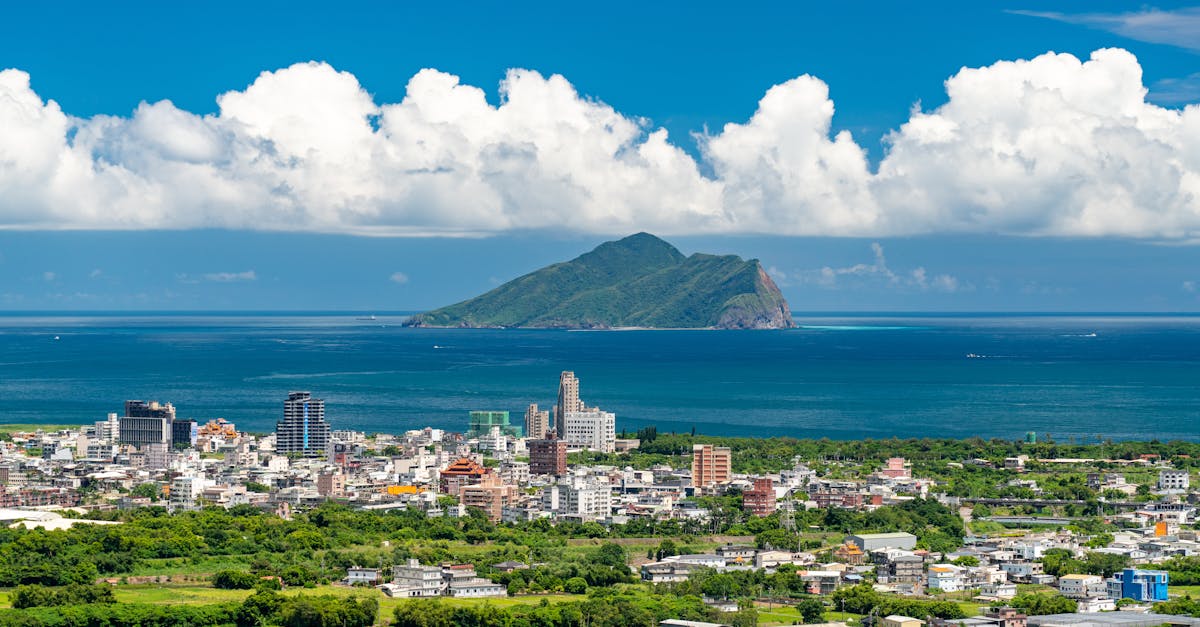
Aerial view of a vibrant Taiwanese cityscape with lush greenery and a striking island in the background.
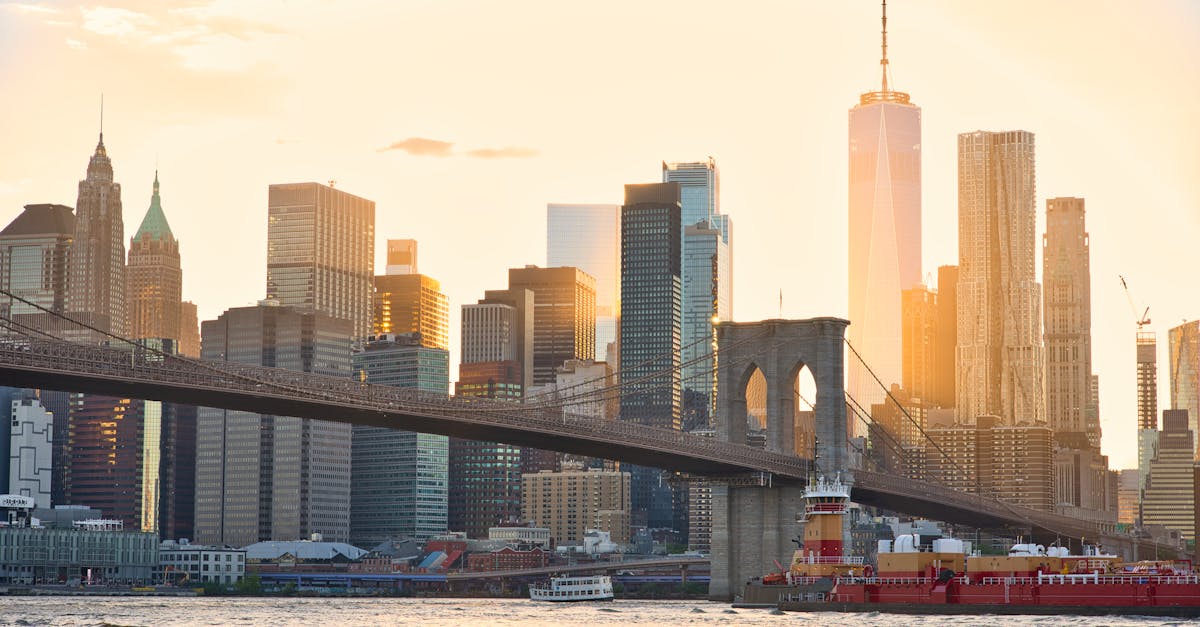
A stunning view of the Brooklyn Bridge and New York City's skyline at sunset.
TW flag
TW
US
US flag

Photos: Timo Volz, Federico Abis · Pexels

Can a Taiwanese traveller study in the United States?

Most Taiwanese travellers go through the embassy or consulate before they travel when heading to United States for study.

The route most travellers use is the F-1 Student Visa — United States. Stays of up to 1825 days, expect to pay around $535 in mandatory fees, processing usually takes 30–90 days.

The paperwork is heavy — approval is likely if your documents are in order.

1 other route sit below if this one doesn't fit.

Straight from travel.state.gov.

Study visas have major life consequences.

Long-stay visa decisions affect your right to live, work, study, or remain with family. Always verify with a qualified immigration adviser or the destination's embassy before making travel, employment, or relocation decisions.

2 options available — review and choose the one that matches your trip.

Embassy visaStudy

F-1 Student Visa — United States

Max stay
1825days
Processing
30–90days
Fee
$535.00
Difficulty2/10·Realism9/10
Why? ▾

Difficulty

Heavy paperwork
2/10

Lots of documentation, eligibility thresholds, or a sponsor required. Start months ahead and consider professional advice.

Why this score?
  • Embassy/consulate visa application
  • +1Strong baseline access — visa-free tourism eases the application footprint
  • -2Long processing time (up to 90 days)
  • -0.5Proof of funds required
  • -0.5Proof of accommodation required
  • -0.5Biometrics appointment required
  • -0.5Moderate documentation list (6 items)

Approval realism

Approval is likely
9/10

Most applicants with the right paperwork get approved.

What drives this score?
  • Embassy visa applications generally succeed when documentation is complete and ties to home are clear
  • +1.5Visa-free baseline access — approval rates are routinely high for this passport
Step-by-step checklist

Your application checklist

  1. 1

    Check your passport validity

    165+ days before

    Most countries require 6+ months of validity beyond your travel dates and at least one blank page. If it's close, renew before applying.

  2. 2

    Gather supporting documents

    149+ days before

    You'll need: Acceptance to a SEVP-certified US institution (Form I-20); Proof of funds covering tuition + living costs for the entire program; Strong ties to home country (no immigrant intent); SEVIS I-901 fee paid (US$350); and others (see full list above).

  3. 3

    Prepare proof of funds

    149+ days before

    Bank statements covering 3–6 months are standard. Include both savings and recent income flow — adjudicators look for stability, not just balance.

  4. 4

    Book refundable flight + accommodation

    142+ days before

    Use a refundable booking (or a free hold/itinerary service) until your visa is approved — embassies want to see real plans, but you don't want to lose the money on a refusal.

  5. 5

    Book a biometrics appointment (US embassy / consulate)

    142+ days before

    Biometrics centres often have 1–3 week waitlists. Book the slot the moment your application is submitted, not after.

  6. 6

    Submit the application to the embassy or consulate

    135+ days before

    In person at the consulate with jurisdiction over your residence. Bring originals + photocopies of every document. Most consulates require a prior appointment.

  7. 7

    Track the application; print the approval

    7+ days before

    Decisions typically take 30–90 days. Print or save a clear PDF of the approved visa — airlines check this at check-in.

  8. 8

    On the day of travel

    day of travel

    Carry: passport (printed visa if applicable), onward ticket, proof of accommodation, proof of funds, travel insurance. Border officers retain discretion regardless of visa status.

Show full requirements, fees, and source
Passport valid 6+ monthsProof of fundsProof of accommodationBiometrics (US embassy / consulate)

What you need

  • Acceptance to a SEVP-certified US institution (Form I-20)
  • Proof of funds covering tuition + living costs for the entire program
  • Strong ties to home country (no immigrant intent)
  • SEVIS I-901 fee paid (US$350)
  • DS-160 online non-immigrant visa application
  • On-campus work (20 hrs/week) permitted; OPT extension after graduation (12 months, +24 STEM)

Fee breakdown

  • MRV non-immigrant visa fee$185.00
  • SEVIS I-901 fee$350.00
View primary source (travel.state.gov)
Embassy visaStudy

J-1 Exchange Visitor — United States

Max stay
365days
Processing
14–60days
Fee
$405.00
Difficulty2/10·Realism9/10
Why? ▾

Difficulty

Heavy paperwork
2/10

Lots of documentation, eligibility thresholds, or a sponsor required. Start months ahead and consider professional advice.

Why this score?
  • Embassy/consulate visa application
  • +1Strong baseline access — visa-free tourism eases the application footprint
  • -2Long processing time (up to 60 days)
  • -0.5Proof of funds required
  • -0.5Biometrics appointment required
  • -1Long documentation list (7 items)

Approval realism

Approval is likely
9/10

Most applicants with the right paperwork get approved.

What drives this score?
  • Embassy visa applications generally succeed when documentation is complete and ties to home are clear
  • +1.5Visa-free baseline access — approval rates are routinely high for this passport
Step-by-step checklist

Your application checklist

  1. 1

    Check your passport validity

    120+ days before

    Most countries require 6+ months of validity beyond your travel dates and at least one blank page. If it's close, renew before applying.

  2. 2

    Gather supporting documents

    104+ days before

    You'll need: Form DS-2019 issued by a US Department of State–designated sponsor; SEVIS I-901 fee paid (US$220 for most categories, $35 au-pair); Acceptance into one of 14 J-1 programme categories (research scholar, student intern, au pair, camp counsellor, summer work travel, etc.); Proof of funds to cover the programme; and others (see full list above).

  3. 3

    Prepare proof of funds

    104+ days before

    Bank statements covering 3–6 months are standard. Include both savings and recent income flow — adjudicators look for stability, not just balance.

  4. 4

    Book a biometrics appointment (US embassy / consulate)

    97+ days before

    Biometrics centres often have 1–3 week waitlists. Book the slot the moment your application is submitted, not after.

  5. 5

    Submit the application to the embassy or consulate

    90+ days before

    In person at the consulate with jurisdiction over your residence. Bring originals + photocopies of every document. Most consulates require a prior appointment.

  6. 6

    Track the application; print the approval

    7+ days before

    Decisions typically take 14–60 days. Print or save a clear PDF of the approved visa — airlines check this at check-in.

  7. 7

    On the day of travel

    day of travel

    Carry: passport (printed visa if applicable), onward ticket, proof of accommodation, proof of funds, travel insurance. Border officers retain discretion regardless of visa status.

Show full requirements, fees, and source
Passport valid 6+ monthsProof of fundsBiometrics (US embassy / consulate)

What you need

  • Form DS-2019 issued by a US Department of State–designated sponsor
  • SEVIS I-901 fee paid (US$220 for most categories, $35 au-pair)
  • Acceptance into one of 14 J-1 programme categories (research scholar, student intern, au pair, camp counsellor, summer work travel, etc.)
  • Proof of funds to cover the programme
  • Strong ties to home country (no immigrant intent)
  • Health insurance meeting J-1 minimums for the duration of the programme
  • 212(e) two-year home-residency requirement may apply

Fee breakdown

  • DS-160 application fee$185.00
  • SEVIS I-901 fee$220.00
View primary source (j1visa.state.gov)

What you'll need

Study visa for United States

Specific to Taiwanese passport holders.

Start ~0–12 weeks before your intended travel date.

Order these first — they have the longest lead time

  • Police certificate

    Background2–12 weeks

    A criminal-record clearance from every country you've lived in for 6+ months in the past 10 years. Universally required for work, study, family and PR routes.

    How: FBI Channeler (US), ACRO (UK), AFP National Police Check (AU), state police of each country lived in.

  • Education credentials evaluation

    Credentials4–12 weeks

    WES (Canada/US), ECE, IQAS, UK ENIC, or the destination's local equivalent — converts your foreign degree to the local framework.

    How: Order online; allow 4–10 weeks. Request your university to send transcripts directly to the assessor.

  • University admission letter

    Purpose evidence2–9 weeks

    An unconditional offer (I-20 for US, CAS for UK, CoE for Australia, CAQ + Letter of Acceptance for Canada).

    How: Issued by your university once you've accepted the offer and paid the deposit.

  • English- / language-proficiency test

    Credentials3–9 weeks

    IELTS, TOEFL, PTE, DELE, TestDaF, JLPT — depending on the destination. Most have minimum scores per visa class.

    How: Book on the test provider's site. Test slots typically 2–4 weeks out; results 5–15 days after the test.

  • Valid passport

    Identity2–8 weeks

    Most countries require your passport to be valid for at least six months beyond your departure date, with two or more blank pages.

    How: Renew via your own country's passport office if expiring within 12 months.

  • Medical examination

    Medical1–4 weeks

    Conducted by a panel physician approved by the destination's immigration authority. Includes chest X-ray, blood tests, and an interview.

    How: Book directly with a panel physician — find them on the destination's immigration website.

  • Apostille / certified document copies

    Credentials1–4 weeks

    Hague Apostille on civil documents (birth, marriage, education certificates) for countries that recognise the convention. Other countries require consular legalisation instead.

    How: US: state Secretary of State or US State Dept. UK: FCDO Legalisation Office. Other: ministry of foreign affairs of the issuing country.

Then gather these

  • Biometrics (fingerprints + photo)

    Background1–4 weeks

    Captured at a Visa Application Centre (VFS, BLS, TLScontact). Walk-in is rarely possible — appointment slots fill up.

    How: Book on the VAC website after submitting your online application.

  • Certified translation of documents

    Credentials1–2 weeks

    If your documents are not in the destination's official language, you may need a sworn or certified translator.

    How: ATA-certified (US) / ITI-qualified (UK) translators, or a sworn translator registered with the destination's consulate.

  • Proof of funds (long-stay)

    Financial1–2 weeks

    Country-specific minimum savings — e.g. ~CAD 14,000 (Canada study/work permits, single applicant), ~£1,334/month + £8,000 reserve (UK family), proof of income for digital-nomad routes.

    How: Bank statements going back 3–6 months, sometimes a sworn affidavit of support from a sponsor.

  • Tuition payment receipt

    Financial1–7 days

    Many study visas require a first-semester or full-year tuition payment receipt as proof of funds.

    How: Issued by your university after you pay the deposit.

  • Passport-style photograph

    Identity1–3 days

    A recent biometric photo to the destination's specifications. Most consulates require their own dimensions, not your home country's.

    How: Any high-street photo studio, or app-based services that meet ICAO 9303 spec.

  • Online visa application form

    Application1–3 days

    The destination's online form (DS-160 for US, gov.uk for UK, IRCC portal for Canada, ImmiAccount for Australia, e-Visa portal for most others).

    How: Apply directly on the destination government website — never via a third-party paid service.

  • Application fee payment

    Application1 day

    Payable to the destination government directly. Fees range from ~$25 (e-Visas) to $2,500+ (US EB-1).

    How: Card payment on the destination's portal. Receipt required for the application.

Lead times are global averages. Country-specific channels can be faster (FBI Channeler in days vs FBI Mail in months) — always check the destination's embassy or visa portal for current timelines.

Make your case

★ Hand-written for this route

Tailored guidance — Taiwanese applying for a study visa to United States

The same things a £1,000 immigration consultation would tell you — what evidenceUnited States's caseworkers actually weight, a personal-statement skeleton you can adapt to United States's framing, common mistakes that get taiwanese applications refused, and when it's worth hiring a lawyer.

What caseworkers actually weight

  1. 1

    I-20 from a SEVP-certified US school + SEVIS I-901 paid + E-1/E-2 future option

    Taiwan sends ~22,000 students to the US annually. Your US institution issues Form I-20 (F-1) or DS-2019 (J-1) once admitted and proof-of-funds verified. Pay SEVIS I-901 fee ($350 F-1 / $220 J-1) before booking DS-160. Apply at American Institute in Taiwan (AIT) Taipei (Xinyi Section 3) or AIT Kaohsiung. AIT functions as the de facto US consulate (no formal diplomatic relations since 1979). Taiwan is on the Visa Waiver Program for tourism (90-day ESTA), but study still requires F-1. Notably: Taiwan is treaty-eligible for E-1/E-2 — a future career consideration.

  2. 2

    Strong source-of-funds + Taiwan's smooth interview profile

    Show 1st-year tuition + living costs ($40-80k). Document Taiwanese bank statements (Cathay United, Mega International, CTBC, First Commercial, Bank of Taiwan, ESun, Taishin, Fubon) with USD-equivalent at CBC rate. Taiwan has historically had the lowest F-1 refusal rates among East Asian sources (~5-10%) — applications process smoothly when documentation is complete. Family business funding: attach 統一編號 (Tax ID), 公司登記 (company registration), and 3 years of 報稅 (tax filings).

  3. 3

    Taiwanese degrees + apostille-equivalent — TECRO/TECO authentication

    Taiwan isn't a Hague Apostille signatory (and isn't UN-member). Authentication chain: Taiwanese MOFA (外交部) authentication at Taipei or regional offices, then TECRO/TECO (Taipei Economic and Cultural Representative Office) authentication at the nearest US office (TECRO Washington DC, TECO LA/SF/NY/Chicago/Houston/Atlanta/Boston/Honolulu/Miami/Seattle/Denver/Guam) when you arrive in US. Cost NTD 400/document at MOFA, USD 15-50 at TECO. Most US schools accept MOFA-authenticated copies + sworn translation.

  4. 4

    Taiwanese male military service status (substitute service or completed conscription)

    All Taiwanese males 18-36 must show resolved military obligation. Taiwan extended conscription from 4 months back to 1 year (Tiao Tsi Yi Chiao 條子役 service) effective 2024 birth cohorts. Show 役男 status: 已服役 (completed), 替代役 (substitute service done), 延期 (deferral with study abroad approval through 教育部 or 內政部 entry/exit permit). Without proper deferral, your future return to Taiwan triggers immediate conscription. Apply for 出境核准 (departure approval) at 內政部移民署 before flying.

Personal-statement skeleton

Fill in each section with your own facts, dates, and details. The structure mirrors what caseworkers expect to find.

  1. Why this specific US programme over Taiwanese or alternative destinations

    Taiwan has elite universities (NTU 台大, NTHU 清華, NCTU 交大 / NYCU after merger, NCKU 成大, NTNU 師大, Yang Ming Chiao Tung 陽明交大). Explain why your US programme offers something unique — research lab, specific professor, industry network (Silicon Valley for CS / semiconductor, NYC for finance, Boston for biotech, LA for entertainment), specialised programme. Vague 'American education is high quality' is a 214(b) refusal trigger.

  2. Funding — Taiwanese family / business / scholarship structure

    Quantify: tuition $X, living $Y, total Year 1 $Z. Then show coverage: family contribution NTD X (with bank statement, parents' 報稅資料 last 3 years, family business 公司登記 if business-owner). Taiwan MOE Scholarship (教育部公費留學) is the most prestigious: NTD 2.4-3.2 million/year for selected fields — apply via MOE annual cycle. Foundation scholarships: Lin Tian-Cu Memorial, Frank Hawkins Kenan Institute, Fulbright Taiwan.

  3. Post-graduation plan — your return to Taiwan

    F-1 visas require intent to return. State which Taiwanese sector you'll return to: TSMC, UMC, MediaTek, ASE, AUO, Hon Hai, Quanta, Pegatron, Asus, Acer, Gigabyte (semiconductor + electronics — Taiwan's strongest sectors), Chinatrust, Fubon, Cathay United, Mega Financial (banking), Eva Air / China Airlines / Starlux (aviation), or family business succession. If you want OPT briefly mention but emphasise return.

  4. Family ties remaining in Taiwan + military status

    List parents (occupation, location — Taipei / New Taipei / Taichung / Kaohsiung / Hsinchu / Tainan district level), siblings, partner. Mention Taiwanese property — family home with 房屋登記 in parents' name, expected return-job, Taiwanese bank accounts. For males 18-36, explicitly state military service status with 兵單 (conscription notice) or 退伍令 (discharge order) attached.

Mistakes that cost real money

  • Apply at AIT Taipei OR AIT Kaohsiung — Kaohsiung has shorter wait times than Taipei during peak student-visa season (May-August)
  • F-1 visa fee is $185; pay via NTD-USD bank transfer at CTBC, Cathay United, or Mega International — both AIT offices accept the MRV receipt from any major bank
  • Don't pay 'visa consultancy' agencies NTD 50,000-150,000 — AIT is straightforward, DS-160 is free, and visa agencies don't influence consular decisions
  • Taiwan MOE Government Scholarship for Overseas Study (公費留學) covers tuition + living + flights for selected programmes — apply via Ministry of Education annual cycle (deadline typically February)
  • Fulbright Taiwan (~$30,000 + tuition for grad students) — applications open August-September via Foundation for Scholarly Exchange (FSE) Taipei office
  • Yushan Scholarship for Younger Scholars / Distinguished Scholars — for academic-track students returning to Taiwanese universities post-PhD
  • Use Cathay United or Mega International student remittance for tuition — lower FX fees than retail; CBC educational outflow has no annual cap with admission proof
  • MOFA authentication: NTD 400/document at MOFA Taipei (Section 3 Heping E Road) or regional offices (Taichung, Kaohsiung, Hualien) — don't use 'document services' charging NTD 3,000+

DIY or hire a lawyer?

✓ DIY is fine if

  • First-time F-1 / J-1 with clean record, clear funding, strong programme fit
  • Standard Fulbright Taiwan or MOE scholarship F-1 application
  • Renewal of existing F-1 at AIT Taipei / Kaohsiung during winter / summer breaks
  • OPT or STEM OPT application during or after the programme
  • Future transition from F-1 to H-1B / O-1 / E-2 (Taiwan's E-2 eligibility is a long-term advantage)

⚠ Get a specialist if

  • Prior US visa refusal (any category — B1/B2 tourist refusal is a red flag for F-1)
  • Taiwanese criminal record (drug under 毒品危害防制條例 is absolute disqualifier)
  • Unresolved Taiwanese military obligation (males 18-36 with active 兵單 approaching expiry)
  • Family member with prior US asylum claim (rare for Taiwanese, but Tiananmen / 1989 era applications exist)
  • Funding from a sponsor in mainland China — extra US scrutiny on Cross-Strait funding sources
  • Past visa overstay in any country
  • Dual Taiwan-mainland China passport / household registration (highly unusual but creates complex disclosure issues)
  • Hong Kong-born Taiwanese or Macau-born Taiwanese — different consular jurisdiction (HKSAR / Macau passport vs Taiwan passport) affects visa filing
  • Transfer from UK/Canadian/Australian student visa to US F-1
This guidance is general — not legal advice. For high-stakes routes (refusal history, criminal record, complex finances), spend the money on a qualified immigration adviser regulated by your destination (UK: OISC / SRA; AU: MARA; US: bar-admitted attorney).

Email me if United States's policy changes

ONE email when the rules change for Taiwanese travellers. No account, no marketing.

Other visa types for this route

We also have data on these visa categories between TW and US.

Related routes

Compare other study-visa routes

Sources & references

Every link below is a primary government source. We aggregate; the source is the authority. If anything on this page disagrees with a link below, the link wins.

Sponsored

While you're sorting your trip to United States

We earn a small commission on bookings made via these links — it helps keep the visa tool free. The visa info above is independent of any partner. Our commercial policy →

Browse other destinations

Where can Taiwanese passport holders go?

Other passports visiting United States

Who needs a visa for United States?

Informational only. A valid visa permits entry subject to officer discretion at the border. Always verify with the destination's embassy or official source before travel, employment, or relocation.