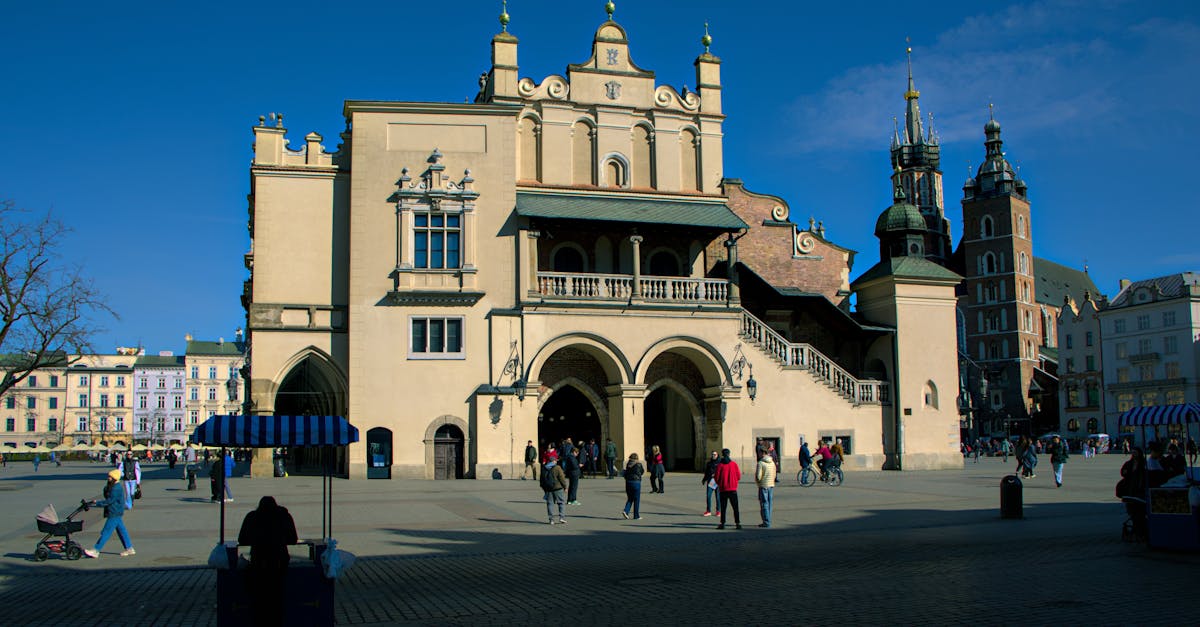

Explore the historic and vibrant architecture of Kraków's Market Square, a cultural hub.
A breathtaking view of Cologne Cathedral at sunrise, surrounded by urban cityscape.
PL flag
PL
DE
DE flag

Photos: Piotr Kalinowski, Miguel Andres Parra · Pexels

Can a Polish traveller work in Germany?

Recent change · Oct 2025

Schengen EES (Entry/Exit System) is now operational

All non-EU travellers entering the Schengen area now have biometrics (fingerprints + facial photo) registered at the border on first entry. Adds 5–15 minutes to your border crossing on first arrival; subsequent crossings within 3 years use the stored data.

Most Polish travellers go through the embassy or consulate before they travel when heading to Germany for work.

The route most travellers use is the Chancenkarte — Germany Opportunity Card. Stays of up to 365 days, expect to pay around €75 in mandatory fees, processing usually takes 30–90 days.

The paperwork is heavy — approval is likely if your documents are in order.

1 other route sit below if this one doesn't fit.

Straight from make-it-in-germany.com.

Work visas have major life consequences.

Long-stay visa decisions affect your right to live, work, study, or remain with family. Always verify with a qualified immigration adviser or the destination's embassy before making travel, employment, or relocation decisions.

2 options available — review and choose the one that matches your trip.

Embassy visaWork

Chancenkarte — Germany Opportunity Card

Max stay
365days
Processing
30–90days
Fee
€75.00≈ $88.24
Difficulty3/10·Realism9/10
Why? ▾

Difficulty

Heavy paperwork
3/10

Lots of documentation, eligibility thresholds, or a sponsor required. Start months ahead and consider professional advice.

Why this score?
  • Embassy/consulate visa application
  • +1Strong baseline access — visa-free tourism eases the application footprint
  • -2Long processing time (up to 90 days)
  • -0.5Proof of funds required
  • -0.5Biometrics appointment required
  • -0.5Moderate documentation list (5 items)

Approval realism

Approval is likely
9/10

Most applicants with the right paperwork get approved.

What drives this score?
  • Embassy visa applications generally succeed when documentation is complete and ties to home are clear
  • +1.5Visa-free baseline access — approval rates are routinely high for this passport
Step-by-step checklist

Your application checklist

  1. 1

    Check your passport validity

    165+ days before

    Most countries require 6+ months of validity beyond your travel dates and at least one blank page. If it's close, renew before applying.

  2. 2

    Gather supporting documents

    149+ days before

    You'll need: Threshold: Points-based job-seeker visa: ≥ 6 points across qualification, work experience, language skills, age, prior connection to Germany.; Recognised university / vocational qualification; ≥ 6 points on the Opportunity Card scoring (qualification, experience, language, age, ties); Proof of funds (~€11,200 for the year, or part-time work contract); and others (see full list above).

  3. 3

    Prepare proof of funds

    149+ days before

    Bank statements covering 3–6 months are standard. Include both savings and recent income flow — adjudicators look for stability, not just balance.

  4. 4

    Book a biometrics appointment (embassy / consulate / VFS centre)

    142+ days before

    Biometrics centres often have 1–3 week waitlists. Book the slot the moment your application is submitted, not after.

  5. 5

    Submit the application to the embassy or consulate

    135+ days before

    In person at the consulate with jurisdiction over your residence. Bring originals + photocopies of every document. Most consulates require a prior appointment.

  6. 6

    Track the application; print the approval

    7+ days before

    Decisions typically take 30–90 days. Print or save a clear PDF of the approved visa — airlines check this at check-in.

  7. 7

    On the day of travel

    day of travel

    Carry: passport (printed visa if applicable), onward ticket, proof of accommodation, proof of funds, travel insurance. Border officers retain discretion regardless of visa status.

Show full requirements, fees, and source
Passport valid 6+ monthsProof of fundsBiometrics (embassy / consulate / VFS centre)

What you need

  • Threshold: Points-based job-seeker visa: ≥ 6 points across qualification, work experience, language skills, age, prior connection to Germany.
  • Recognised university / vocational qualification
  • ≥ 6 points on the Opportunity Card scoring (qualification, experience, language, age, ties)
  • Proof of funds (~€11,200 for the year, or part-time work contract)
  • Up to 20 hrs/week of permitted work + trial employment of up to 2 weeks per employer

Fee breakdown

  • Government / processing fee (typical)€75.00≈ $88.24
View primary source (make-it-in-germany.com)
Embassy visaWork

§21 Self-Employed Residence Permit — Germany

Max stay
1095days
Processing
30–120days
Fee
€110.00≈ $129.41
Difficulty2/10·Realism9/10
Why? ▾

Difficulty

Heavy paperwork
2/10

Lots of documentation, eligibility thresholds, or a sponsor required. Start months ahead and consider professional advice.

Why this score?
  • Embassy/consulate visa application
  • +1Strong baseline access — visa-free tourism eases the application footprint
  • -2Long processing time (up to 120 days)
  • -0.5Proof of funds required
  • -0.5Biometrics appointment required
  • -1Long documentation list (8 items)

Approval realism

Approval is likely
9/10

Most applicants with the right paperwork get approved.

What drives this score?
  • Embassy visa applications generally succeed when documentation is complete and ties to home are clear
  • +1.5Visa-free baseline access — approval rates are routinely high for this passport
Step-by-step checklist

Your application checklist

  1. 1

    Check your passport validity

    210+ days before

    Most countries require 6+ months of validity beyond your travel dates and at least one blank page. If it's close, renew before applying.

  2. 2

    Gather supporting documents

    194+ days before

    You'll need: Two routes: §21(1) Freiberufler (liberal-profession freelancer — doctors, lawyers, journalists, artists, designers, IT consultants) OR §21(5) Selbstständige Gewerbe (commercial / trade business); Detailed business plan demonstrating economic viability and regional benefit; Proof of personal capital / financing (no fixed minimum but typically €30,000+ recommended); Endorsement from the regional Chamber of Commerce (IHK) for Gewerbe applicants; and others (see full list above).

  3. 3

    Prepare proof of funds

    194+ days before

    Bank statements covering 3–6 months are standard. Include both savings and recent income flow — adjudicators look for stability, not just balance.

  4. 4

    Book a biometrics appointment (Destination consulate / Visa Application Centre)

    187+ days before

    Biometrics centres often have 1–3 week waitlists. Book the slot the moment your application is submitted, not after.

  5. 5

    Submit the application to the embassy or consulate

    180+ days before

    In person at the consulate with jurisdiction over your residence. Bring originals + photocopies of every document. Most consulates require a prior appointment.

  6. 6

    Track the application; print the approval

    7+ days before

    Decisions typically take 30–120 days. Print or save a clear PDF of the approved visa — airlines check this at check-in.

  7. 7

    On the day of travel

    day of travel

    Carry: passport (printed visa if applicable), onward ticket, proof of accommodation, proof of funds, travel insurance. Border officers retain discretion regardless of visa status.

Show full requirements, fees, and source
Passport valid 6+ monthsProof of fundsBiometrics (Destination consulate / Visa Application Centre)

What you need

  • Two routes: §21(1) Freiberufler (liberal-profession freelancer — doctors, lawyers, journalists, artists, designers, IT consultants) OR §21(5) Selbstständige Gewerbe (commercial / trade business)
  • Detailed business plan demonstrating economic viability and regional benefit
  • Proof of personal capital / financing (no fixed minimum but typically €30,000+ recommended)
  • Endorsement from the regional Chamber of Commerce (IHK) for Gewerbe applicants
  • Professional qualifications evidence (degree, portfolio, client letters, prior earnings)
  • Adequate health insurance covering Germany
  • Apply at the German embassy or consulate in your country of residence first; convert to residence at local Ausländerbehörde
  • Path to permanent residence (Niederlassungserlaubnis) after 3 years if business is profitable

Fee breakdown

  • Visa application fee€110.00≈ $129.41
View primary source (make-it-in-germany.com)

What you'll need

Work visa for Germany

Specific to Polish passport holders.

Start ~0–13 weeks before your intended travel date.

Order these first — they have the longest lead time

  • Employer sponsorship / CoS

    Purpose evidence2–13 weeks

    A Certificate of Sponsorship (UK), Labour Market Impact Assessment (Canada), Form I-129 (US H-1B), or equivalent. The sponsor obtains this; you receive a reference number.

    How: Your employer applies to the destination's immigration authority. You can't start without their reference number.

  • Police certificate

    Background2–12 weeks

    A criminal-record clearance from every country you've lived in for 6+ months in the past 10 years. Universally required for work, study, family and PR routes.

    How: FBI Channeler (US), ACRO (UK), AFP National Police Check (AU), state police of each country lived in.

  • Education credentials evaluation

    Credentials4–12 weeks

    WES (Canada/US), ECE, IQAS, UK ENIC, or the destination's local equivalent — converts your foreign degree to the local framework.

    How: Order online; allow 4–10 weeks. Request your university to send transcripts directly to the assessor.

  • English- / language-proficiency test

    Credentials3–9 weeks

    IELTS, TOEFL, PTE, DELE, TestDaF, JLPT — depending on the destination. Most have minimum scores per visa class.

    How: Book on the test provider's site. Test slots typically 2–4 weeks out; results 5–15 days after the test.

  • Valid passport

    Identity2–8 weeks

    Most countries require your passport to be valid for at least six months beyond your departure date, with two or more blank pages.

    How: Renew via your own country's passport office if expiring within 12 months.

  • Medical examination

    Medical1–4 weeks

    Conducted by a panel physician approved by the destination's immigration authority. Includes chest X-ray, blood tests, and an interview.

    How: Book directly with a panel physician — find them on the destination's immigration website.

  • Apostille / certified document copies

    Credentials1–4 weeks

    Hague Apostille on civil documents (birth, marriage, education certificates) for countries that recognise the convention. Other countries require consular legalisation instead.

    How: US: state Secretary of State or US State Dept. UK: FCDO Legalisation Office. Other: ministry of foreign affairs of the issuing country.

Then gather these

  • Biometrics (fingerprints + photo)

    Background1–4 weeks

    Captured at a Visa Application Centre (VFS, BLS, TLScontact). Walk-in is rarely possible — appointment slots fill up.

    How: Book on the VAC website after submitting your online application.

  • CV / résumé and work history

    Purpose evidence1–3 weeks

    Up-to-date résumé covering at least your last 10 years of employment. Some routes (Canada Express Entry, Australia points) require reference letters with hours per week.

    How: Self-prepared. Get reference letters from past employers on letterhead, signed.

  • Signed job offer

    Purpose evidence0–2 weeks

    A signed contract or offer letter from a sponsoring employer. Required for every work-route visa worldwide.

    How: Issued by the sponsoring employer once you've accepted.

  • Certified translation of documents

    Credentials1–2 weeks

    If your documents are not in the destination's official language, you may need a sworn or certified translator.

    How: ATA-certified (US) / ITI-qualified (UK) translators, or a sworn translator registered with the destination's consulate.

  • Proof of funds (long-stay)

    Financial1–2 weeks

    Country-specific minimum savings — e.g. ~CAD 14,000 (Canada study/work permits, single applicant), ~£1,334/month + £8,000 reserve (UK family), proof of income for digital-nomad routes.

    How: Bank statements going back 3–6 months, sometimes a sworn affidavit of support from a sponsor.

  • Passport-style photograph

    Identity1–3 days

    A recent biometric photo to the destination's specifications. Most consulates require their own dimensions, not your home country's.

    How: Any high-street photo studio, or app-based services that meet ICAO 9303 spec.

  • Online visa application form

    Application1–3 days

    The destination's online form (DS-160 for US, gov.uk for UK, IRCC portal for Canada, ImmiAccount for Australia, e-Visa portal for most others).

    How: Apply directly on the destination government website — never via a third-party paid service.

  • Application fee payment

    Application1 day

    Payable to the destination government directly. Fees range from ~$25 (e-Visas) to $2,500+ (US EB-1).

    How: Card payment on the destination's portal. Receipt required for the application.

Lead times are global averages. Country-specific channels can be faster (FBI Channeler in days vs FBI Mail in months) — always check the destination's embassy or visa portal for current timelines.

Make your case

★ Hand-written for this route

Tailored guidance — Polish applying for a work visa to Germany

The same things a £1,000 immigration consultation would tell you — what evidenceGermany's caseworkers actually weight, a personal-statement skeleton you can adapt to Germany's framing, common mistakes that get polish applications refused, and when it's worth hiring a lawyer.

What caseworkers actually weight

  1. 1

    EU freedom of movement — no work permit needed for Polish citizens since 2011

    Poland joined EU 2004; restrictions on Polish workers in Germany lifted 2011 under transitional provisions. Polish citizens have full freedom of movement under TFEU Article 45 — no work permit, no visa, no residence permit required. Simply move to Germany and register with the local Bürgeramt (Anmeldung) within 14 days of arrival. Polish-German worker migration is one of Europe's largest corridors — ~2 million Poles in Germany (largest non-German EU group).

  2. 2

    Anmeldung + Steuer-ID + Krankenkasse registration — the practical bottlenecks

    Within 14 days of arrival, register your address (Anmeldung) at the local Bürgeramt — required for everything else. Anmeldung issues Anmeldebescheinigung (registration certificate). With it, you get Steueridentifikationsnummer (tax ID) automatically by mail in 2-3 weeks. Register with German health insurance (gesetzliche Krankenversicherung — TK, AOK, Barmer, DAK at ~14.6% of salary split with employer; OR private Krankenversicherung above €69,300 salary threshold). Without Krankenkasse, employer can't run payroll.

  3. 3

    Polish-German social-security coordination + ZUS / Deutsche Rentenversicherung

    Under EU Regulation 883/2004, Polish and German pension contributions count toward each other (totalization). Polish ZUS contributions made before German move count toward eventual German Rente; German Rentenversicherung contributions count toward eventual Polish ZUS pension. For short-term postings (up to 24 months), Polish workers can stay on ZUS via 'A1 form' (formerly E101) issued by ZUS Polish office — exempting from German Rentenversicherung. Beyond 24 months, switch to German Rentenversicherung; Polish years count toward eventual benefit calculation.

  4. 4

    Polish qualification recognition — automatic for regulated EU professions

    EU Mutual Recognition of Professional Qualifications Directive (2005/36/EC, amended 2013/55/EU) gives automatic recognition for certain professions: doctors, dentists, nurses, midwives, pharmacists, veterinary surgeons, architects. Polish lekarz (doctor), pielęgniarka (nurse), pielęgniarz (male nurse) qualifications are automatically valid in Germany after Anerkennung formality. Other regulated professions (lawyer, accountant, teacher, engineer) require Anerkennung process — typically faster for Polish applicants given EU/EEA framework.

Personal-statement skeleton

Fill in each section with your own facts, dates, and details. The structure mirrors what caseworkers expect to find.

  1. No personal statement needed at the border — Polish citizens travel freely

    Unlike non-EU visa applications, Polish-German movement requires no narrative or documentation at the border. You travel with Polish passport or Polish dowód osobisty (national ID card). However, Anmeldung at Bürgeramt does require: passport/ID, completed Anmeldeformular (registration form), Wohnungsgeberbestätigung (landlord's confirmation of your residence — replaces older Mietvertrag requirement). Bring these to your appointment.

  2. Settlement plan — German employer, city, integration

    While not required by visa officers, you'll need to plan: which German city (Berlin / Hamburg / München / Köln / Frankfurt / Stuttgart / Düsseldorf — large Polish diasporas in NRW Nordrhein-Westfalen and Berlin), which sector (automotive Stuttgart-Wolfsburg, finance Frankfurt, tech Berlin-München, healthcare across Germany), language plan (Polish bilingual schools available in NRW; Berlin Polish School). State your specific German employer name + branch.

  3. Long-term plan — German citizenship, retain Polish, or rotation

    Germany's 2024 citizenship reform allows dual citizenship — Polish-German dual nationality fully permitted now (previously Polish-Germans had to renounce). Naturalisation after 5 years legal residence (3 years with C1 German + special integration including civic engagement); A1/B1 German required + Einbürgerungstest. Many Poles maintain Polish citizenship while gaining German — useful for Polish family ties, Polish property, eventual EU mobility flexibility.

  4. Family + dependants + Polish school year

    EU family members travel freely with you — spouse, registered partner (Lebenspartnerschaft equivalent), minor children, dependent adult children, dependent parents under EU framework. Polish school year (September-June, aligns with German August/September-July) means children can enrol mid-year if arriving outside the standard intake window. Polish schools in Germany (Szkoła Polska im. Adama Mickiewicza, Polish School at Polish Embassy Berlin) supplement German schools for cultural / linguistic continuity.

Mistakes that cost real money

  • EU citizens pay NO immigration fees in Germany — Anmeldung is FREE at Bürgeramt
  • Don't pay 'Polish-German migration consultancies' EUR 1,500-5,000 for what is paperwork-free EU travel + Anmeldung
  • Free Anmeldung appointment booking at Bürgeramt Berlin / Hamburg / München / Köln etc. websites — book 2-4 weeks ahead
  • A1 form from ZUS Poland is FREE — exempts German Rentenversicherung for up to 24 months for posted workers; ZUS-side application via PUE ZUS portal
  • Open N26, Commerzbank, DKB, or Sparkasse account before flying — all accept Polish ID + Polish address
  • Free German language courses for EU citizens at Volkshochschule (municipal community college) — A1-B2 German courses €100-500 (subsidised)
  • Integration course (Integrationskurs) for B1 German + civic knowledge is FREE for EU citizens who need it for naturalisation
  • Polish doctors / nurses in Germany earn €30k-80k+/year — significantly above Polish average; Anerkennung process for medics is fast
  • Tax treaty Germany-Poland (1972, protocol 2003) prevents double-taxation; CSO Poland and Bundeszentralamt für Steuern coordinate
  • Free Polish school enrolment in NRW + Berlin — Polish-language education supplements German state schools

DIY or hire a lawyer?

✓ DIY is fine if

  • EU freedom of movement entry to Germany (no visa needed)
  • Standard Anmeldung at Bürgeramt with Polish passport + Wohnungsgeberbestätigung
  • Polish doctor / nurse / midwife / pharmacist Anerkennung via Bezirksregierung
  • Naturalisation application after 5 years residence (3 years with C1 + integration)
  • EU family-member visa for non-EU spouse / children of Polish citizen

⚠ Get a specialist if

  • Polish criminal record affecting Anerkennung for regulated profession (German Ärztekammer / Pflegekammer scrutinise)
  • Past German entry ban / Schengen overstay flagged on Polish-side records
  • Non-EU spouse needing EU family-member visa (technical, requires care)
  • Polish pension claim coordination with German Rentenversicherung when retiring
  • Loss of Polish citizenship (renunciation) for some legal reason — unusual
  • Complex tax-residency split (working in Germany, Polish family business, dual home country)
  • Polish-German child custody or family dispute with both countries' courts involved
  • Polish-German cross-border worker (Grenzgänger) status — different tax / social-security implications
This guidance is general — not legal advice. For high-stakes routes (refusal history, criminal record, complex finances), spend the money on a qualified immigration adviser regulated by your destination (UK: OISC / SRA; AU: MARA; US: bar-admitted attorney).

Email me if Germany's policy changes

ONE email when the rules change for Polish travellers. No account, no marketing.

Other visa types for this route

We also have data on these visa categories between PL and DE.

Related routes

Compare other work-visa routes

Sources & references

Every link below is a primary government source. We aggregate; the source is the authority. If anything on this page disagrees with a link below, the link wins.

Sponsored

While you're sorting your trip to Germany

We earn a small commission on bookings made via these links — it helps keep the visa tool free. The visa info above is independent of any partner. Our commercial policy →

Browse other destinations

Where can Polish passport holders go?

Other passports visiting Germany

Who needs a visa for Germany?

Informational only. A valid visa permits entry subject to officer discretion at the border. Always verify with the destination's embassy or official source before travel, employment, or relocation.