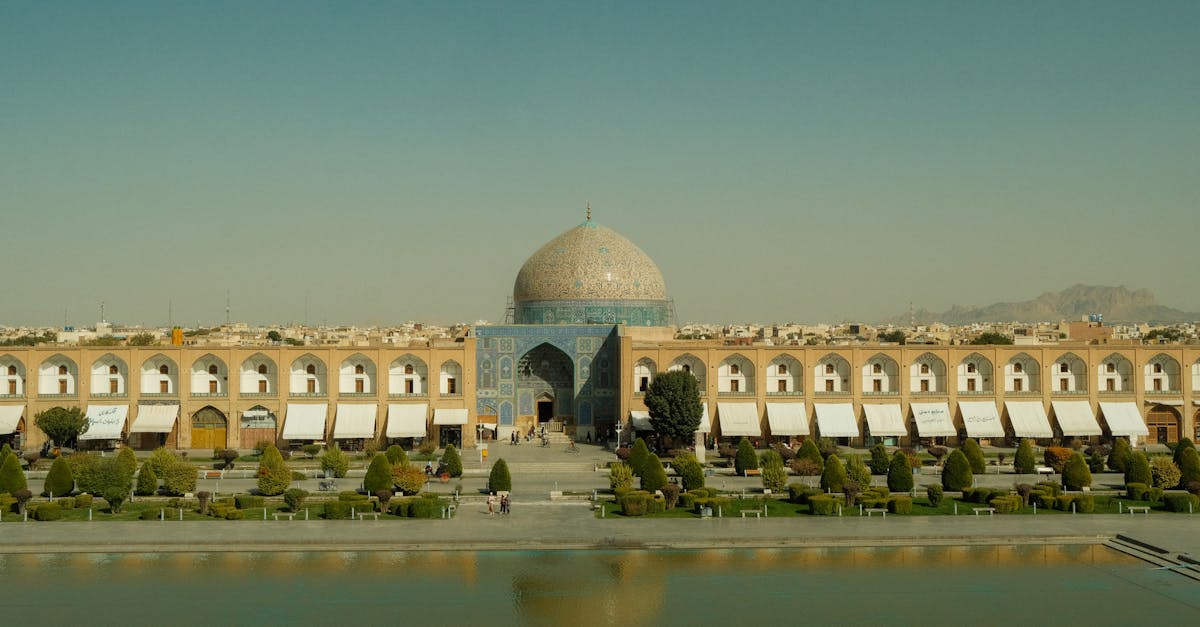
Explore the breathtaking architecture of the Shah Mosque in Isfahan, a UNESCO World Heritage Site, showcasing Persian artistry.
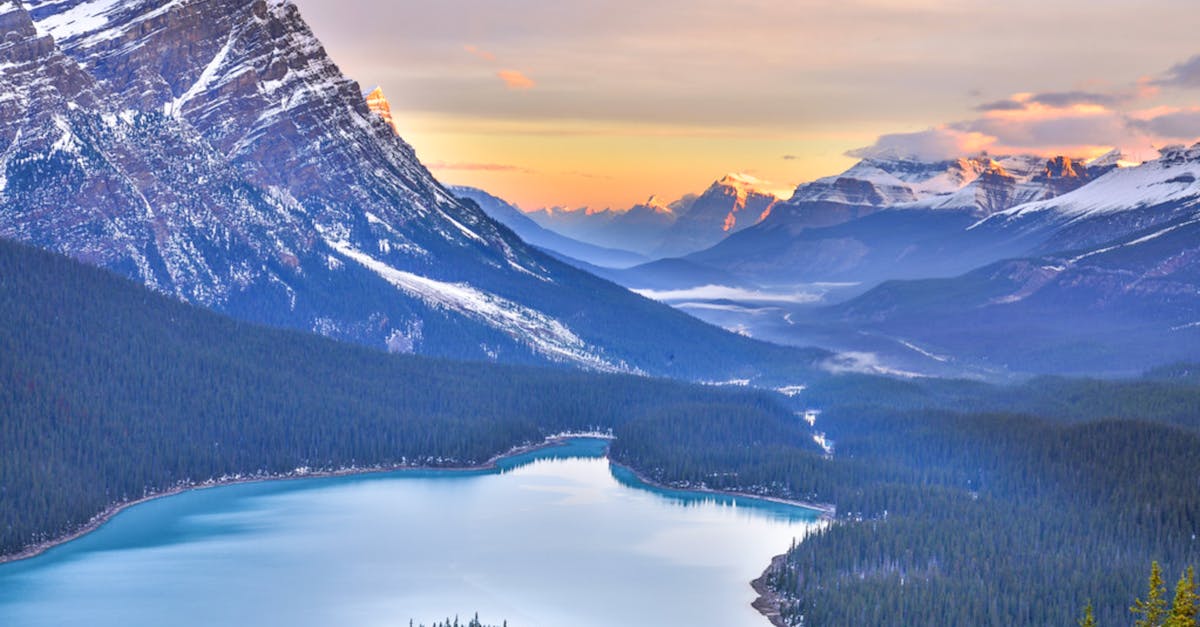
Breathtaking sunrise view of Peyto Lake and the Canadian Rockies in Banff National Park, Alberta.
IR flag
IR
CA
CA flag

Photos: muaz semih güven, Nunzio Guerrera · Pexels

Can an Iranian traveller study in Canada?

Critical

Iranian passport: most Western and many regional destinations require visas with extensive scrutiny

US, UK, Canada, Australia, the Schengen Area, Israel, and Saudi Arabia (since 2016) require embassy visas with case-by-case review. The US generally restricts Iranian-passport holders under Executive Order 13769 successor frameworks. Visa rejection rates are higher than baseline; allow 60+ days for processing.

1 additional warning is folded into the result card below.

Most Iranian travellers go through the embassy or consulate before they travel when heading to Canada for study.

The route most travellers use is the Study Permit — Canada. Stays of up to 1825 days, expect to pay around CA$235 in mandatory fees, processing usually takes 30–120 days.

The paperwork is heavy — real-world approval is the harder hurdle here.

One thing to know first: iranian passport: most western and many regional destinations require visas with extensive scrutiny. We cover this in the warning above.

Straight from canada.ca.

Study visas have major life consequences.

Long-stay visa decisions affect your right to live, work, study, or remain with family. Always verify with a qualified immigration adviser or the destination's embassy before making travel, employment, or relocation decisions.

Approval realism2/10 — Unlikely

Real-world approval is the harder hurdle here than the visa rules themselves.

  • Iranian passport: most Western and many regional destinations require visas with extensive scrutiny
Embassy visaStudy

Study Permit — Canada

Max stay
1825days
Processing
30–120days
Fee
CA$235.00≈ $171.95
Difficulty1/10·Realism2/10
Why? ▾

Difficulty

Heavy paperwork
1/10

Lots of documentation, eligibility thresholds, or a sponsor required. Start months ahead and consider professional advice.

Why this score?
  • Embassy/consulate visa application
  • -2Long processing time (up to 120 days)
  • -0.5Proof of funds required
  • -0.5Biometrics appointment required
  • -1Long documentation list (7 items)

Approval realism

Approval is uncertain
2/10

Real-world approval is the harder hurdle here than the visa rules themselves. Treat with caution and consider alternatives.

What drives this score?
  • Embassy visa applications generally succeed when documentation is complete and ties to home are clear
  • -5Iranian passport — Iranian passport: most Western and many regional destinations require visas with extensive scrutiny
Step-by-step checklist

Your application checklist

  1. 1

    Check your passport validity

    210+ days before

    Most countries require 1+ months of validity beyond your travel dates and at least one blank page. If it's close, renew before applying.

  2. 2

    Gather supporting documents

    194+ days before

    You'll need: Letter of acceptance from a Designated Learning Institution (DLI); Provincial Attestation Letter (PAL) from the province — required since 2024 cap; Proof of funds — CAD$22,895/year (single applicant, outside Quebec) or CAD$25,150 (Quebec) + tuition; Police certificates if required by the visa office; and others (see full list above).

  3. 3

    Prepare proof of funds

    194+ days before

    Bank statements covering 3–6 months are standard. Include both savings and recent income flow — adjudicators look for stability, not just balance.

  4. 4

    Book a biometrics appointment (Visa Application Centre)

    187+ days before

    Biometrics centres often have 1–3 week waitlists. Book the slot the moment your application is submitted, not after.

  5. 5

    Submit the application to the embassy or consulate

    180+ days before

    In person at the consulate with jurisdiction over your residence. Bring originals + photocopies of every document. Most consulates require a prior appointment.

  6. 6

    Track the application; print the approval

    7+ days before

    Decisions typically take 30–120 days. Print or save a clear PDF of the approved visa — airlines check this at check-in.

  7. 7

    On the day of travel

    day of travel

    Carry: passport (printed visa if applicable), onward ticket, proof of accommodation, proof of funds, travel insurance. Border officers retain discretion regardless of visa status.

Show full requirements, fees, and source
Passport valid 1+ monthsProof of fundsBiometrics (Visa Application Centre)

What you need

  • Letter of acceptance from a Designated Learning Institution (DLI)
  • Provincial Attestation Letter (PAL) from the province — required since 2024 cap
  • Proof of funds — CAD$22,895/year (single applicant, outside Quebec) or CAD$25,150 (Quebec) + tuition
  • Police certificates if required by the visa office
  • Medical exam if you've lived 6+ months in a designated country in the past year
  • Spouse may apply for Open Work Permit (since 2024, restricted to graduate-level + select professional programs)
  • Post-Graduation Work Permit eligible on completion

Fee breakdown

  • Study Permit application feeCA$150.00≈ $109.75
  • Biometrics feeCA$85.00≈ $62.19
View primary source (canada.ca)

What you'll need

Study visa for Canada

Specific to Iranian passport holders.

Start ~0–12 weeks before your intended travel date.

Order these first — they have the longest lead time

  • Police certificate

    Background2–12 weeks

    A criminal-record clearance from every country you've lived in for 6+ months in the past 10 years. Universally required for work, study, family and PR routes.

    How: FBI Channeler (US), ACRO (UK), AFP National Police Check (AU), state police of each country lived in.

  • Education credentials evaluation

    Credentials4–12 weeks

    WES (Canada/US), ECE, IQAS, UK ENIC, or the destination's local equivalent — converts your foreign degree to the local framework.

    How: Order online; allow 4–10 weeks. Request your university to send transcripts directly to the assessor.

  • University admission letter

    Purpose evidence2–9 weeks

    An unconditional offer (I-20 for US, CAS for UK, CoE for Australia, CAQ + Letter of Acceptance for Canada).

    How: Issued by your university once you've accepted the offer and paid the deposit.

  • English- / language-proficiency test

    Credentials3–9 weeks

    IELTS, TOEFL, PTE, DELE, TestDaF, JLPT — depending on the destination. Most have minimum scores per visa class.

    How: Book on the test provider's site. Test slots typically 2–4 weeks out; results 5–15 days after the test.

  • Valid passport

    Identity2–8 weeks

    Most countries require your passport to be valid for at least six months beyond your departure date, with two or more blank pages.

    How: Renew via your own country's passport office if expiring within 12 months.

  • Medical examination

    Medical1–4 weeks

    Conducted by a panel physician approved by the destination's immigration authority. Includes chest X-ray, blood tests, and an interview.

    How: Book directly with a panel physician — find them on the destination's immigration website.

  • Apostille / certified document copies

    Credentials1–4 weeks

    Hague Apostille on civil documents (birth, marriage, education certificates) for countries that recognise the convention. Other countries require consular legalisation instead.

    How: US: state Secretary of State or US State Dept. UK: FCDO Legalisation Office. Other: ministry of foreign affairs of the issuing country.

Then gather these

  • Biometrics (fingerprints + photo)

    Background1–4 weeks

    Captured at a Visa Application Centre (VFS, BLS, TLScontact). Walk-in is rarely possible — appointment slots fill up.

    How: Book on the VAC website after submitting your online application.

  • Certified translation of documents

    Credentials1–2 weeks

    If your documents are not in the destination's official language, you may need a sworn or certified translator.

    How: ATA-certified (US) / ITI-qualified (UK) translators, or a sworn translator registered with the destination's consulate.

  • Proof of funds (long-stay)

    Financial1–2 weeks

    Country-specific minimum savings — e.g. ~CAD 14,000 (Canada study/work permits, single applicant), ~£1,334/month + £8,000 reserve (UK family), proof of income for digital-nomad routes.

    How: Bank statements going back 3–6 months, sometimes a sworn affidavit of support from a sponsor.

  • Tuition payment receipt

    Financial1–7 days

    Many study visas require a first-semester or full-year tuition payment receipt as proof of funds.

    How: Issued by your university after you pay the deposit.

  • Passport-style photograph

    Identity1–3 days

    A recent biometric photo to the destination's specifications. Most consulates require their own dimensions, not your home country's.

    How: Any high-street photo studio, or app-based services that meet ICAO 9303 spec.

  • Online visa application form

    Application1–3 days

    The destination's online form (DS-160 for US, gov.uk for UK, IRCC portal for Canada, ImmiAccount for Australia, e-Visa portal for most others).

    How: Apply directly on the destination government website — never via a third-party paid service.

  • Application fee payment

    Application1 day

    Payable to the destination government directly. Fees range from ~$25 (e-Visas) to $2,500+ (US EB-1).

    How: Card payment on the destination's portal. Receipt required for the application.

Lead times are global averages. Country-specific channels can be faster (FBI Channeler in days vs FBI Mail in months) — always check the destination's embassy or visa portal for current timelines.

Make your case

★ Hand-written for this route

Tailored guidance — Iranian applying for a study visa to Canada

The same things a £1,000 immigration consultation would tell you — what evidenceCanada's caseworkers actually weight, a personal-statement skeleton you can adapt to Canada's framing, common mistakes that get iranian applications refused, and when it's worth hiring a lawyer.

What caseworkers actually weight

  1. 1

    Study Permit + Canadian Designated Learning Institution (DLI)

    Iran sends ~17,000 students to Canada annually — the largest Middle Eastern student cohort. Your Canadian institution must be on the IRCC Designated Learning Institutions (DLI) list. Apply for Study Permit online or via VFS Global Tehran / Ankara / Istanbul / Dubai — Canada closed its Tehran embassy in 2012, so Iranian applicants apply through Ankara, Istanbul, Dubai, or Abu Dhabi visa application centres. Processing 12-24 weeks (longer than other origins due to security screening).

  2. 2

    Heightened security screening (Section 11(1) / Section 34 IRPA)

    Iranian applicants face mandatory enhanced security screening under IRPA Section 11(1) and Section 34 (admissibility on security grounds — covers concerns about Iranian government, IRGC, terrorism financing, dual-use technology). STEM students (especially in nuclear, aerospace, advanced AI, advanced materials, biotech) face automatic background check with 6-18 month processing delays. CSIS (Canadian Security Intelligence Service) and partner agencies conduct the review. Disclose every Iranian government / military / IRGC affiliation, however peripheral.

  3. 3

    Proof of funds + GIC alternative + Iranian sanctions banking workarounds

    Show CAD$20,635 (single, 2024 figure) for living expenses + tuition + return airfare. Iranian banks (Bank Melli, Bank Saderat, Bank Mellat, Bank Pasargad, Bank Sepah) are heavily sanctioned — direct SWIFT transfers to Canada blocked. Iranian students typically use: GIC (Guaranteed Investment Certificate) from Scotiabank Iran-friendly program (CAD$20,635 transfer via third-country bank), bank-statement-via-Türkiye / UAE / Armenia / Georgia third-country relative, family wealth in Iran with Persian-language bank statements + IRR-to-CAD conversion at Tehran Stock Exchange rate.

  4. 4

    Iranian academic transcripts + translation + apostille-equivalent

    Iran isn't a Hague Apostille signatory. Iranian high school diploma (Diplom-e Mottavasete) and university transcripts (Madreke Karshenasi Bachelor, Karshenasi Arshad Master, Doctora) need: 1) issuing institution stamp + Iranian MOSRT (Ministry of Science, Research and Technology) verification for accredited universities — Sharif, Tehran, Isfahan University of Technology, Amirkabir, Iran University of Science and Technology, Shahid Beheshti, 2) Iranian MOFA legalisation, 3) Canadian embassy (currently Ankara / Istanbul / Dubai) authentication, 4) Persian-to-English notarised translation by sworn translator (Motarjem Rasmi). Cost IRR 5-15 million + CAD 50-150 + USD 100-300.

Personal-statement skeleton

Fill in each section with your own facts, dates, and details. The structure mirrors what caseworkers expect to find.

  1. Why Canada over US, UK, or European alternatives

    Iran has elite universities (Sharif University of Technology, University of Tehran, Amirkabir, Iran University of Science and Technology). Explain why Canada specifically — Canadian welcoming policy toward Iranian students, specific Canadian-Iranian academic links (Toronto, Vancouver, Montreal have large Iranian-Canadian diaspora), specific Canadian institution / professor / research lab, Canadian post-study work permit (PGWP) pathway. Reference Canadian-Iranian academic networks: Iranian Studies departments at UofT, UBC, McGill, Concordia.

  2. Your Iranian academic record + post-graduation plan

    List every Iranian school / university with month-precision dates, GPA, supervisor / advisor name. Include Iranian National Code (Kart-e Melli — national ID), passport number. For PhD applicants, document research publications (Iranian + international), advisor relationship, intended Canadian research area. State post-graduation intent honestly: return to Iran (if Iranian government / university bonded), apply for Canadian Post-Graduation Work Permit (PGWP), eventual Permanent Residence via Express Entry / PNP, or onward migration. Canadian Study Permit doesn't require return intent (dual intent permitted).

  3. Funding — Iranian family / GIC / Canadian-Iranian sponsor

    Quantify: tuition CAD$X, living CAD$20,635, total Year 1 CAD$Z. Then show coverage: family contribution IRR X (with Iranian bank statement, parents' employment in named Iranian sector — government, university, private business), GIC certificate CAD$20,635 from Scotiabank / RBC / TD Iran programs, scholarship (Iran's own Ministry of Science scholarship rare for Western study; Canadian university scholarships more common — see below). Iranian-Canadian relatives can act as financial co-sponsors via I-134-equivalent affidavit.

  4. Family ties + Iranian cultural / political context

    List parents (occupation, location — Tehran / Mashhad / Isfahan / Karaj / Shiraz / Tabriz / Qom district level), siblings, partner. Disclose any Iranian government, IRGC, Basij, military, or political organization affiliation (yours or family's) — even peripheral. Mention Iranian property (with sanad-e malekiyat / title deed in parents' name), Iranian bank accounts. For male applicants, military service status: completed conscription (kart-e payan-e khedmat), exemption (kart-e moafiat), or deferral with study-abroad approval. Without resolution, future Iranian re-entry triggers conscription.

Mistakes that cost real money

  • Study Permit application fee CAD$150 + Biometrics CAD$85 — pay online via IRCC portal in CAD (no Canadian-side reciprocity adjustment for Iranians)
  • GIC alternative: family-member-in-Canada-as-sponsor + bank statement from Iran via third-country (Türkiye / UAE / Armenia) — Scotiabank's IRC GIC program is most Iranian-friendly
  • Iranian translation services: Tehran-based Motarjem Rasmi (sworn translator) IRR 300,000-800,000/page — significantly cheaper than Canada-based translation (CAD$30-60/page); list of certified translators at Iranian Judiciary website
  • Many Canadian universities have Iranian-origin scholarship endowments — UofT, McGill, UBC, Waterloo, McMaster, Western, Alberta all have named Iranian-heritage funds or research-area-specific awards
  • Specific Iranian scholarships: Iran Heritage Foundation Canada (UofT, McGill), Iranian Canadian Congress scholarships, Vahab Foundation, Fereshteh-Yegane Memorial Scholarship — apply via Canadian university international admissions
  • Pre-departure orientation through Iranian student associations at Canadian universities — UofT Iranian Students Association, UBC Iranian Society, McGill Persian Society offer free pre-arrival info sessions via Zoom
  • Use third-country remittance (Türkiye İşbank, Habib Bank Pakistan, Dubai-based exchange, Yerevan banks) — direct Iran-Canada banking is sanctioned; not legal advice but reflects actual Iranian student practice
  • Iranian Embassy Ottawa (when open) free notarisation services — currently closed since 2012; use Iranian Interests Section at Pakistani Embassy in Ottawa or apply via Iranian-Canadian community organisations
  • Avoid 'Iran-Canada migration consultancies' charging USD 5,000-30,000 — IRCC has its own free advisers; RCIC (Regulated Canadian Immigration Consultants) cost CAD$2,000-5,000 for full Study Permit + extension service
  • Use Iranian bank statement + sworn translator + Toronto/Vancouver consular interview at VFS Global Dubai or Istanbul — the consular interview is the bottleneck

DIY or hire a lawyer?

✓ DIY is fine if

  • First-time Study Permit with clean record, clear funding via GIC + family, top-DLI institution acceptance
  • Standard PGWP (Post-Graduation Work Permit) application after completing 2+ years study
  • Study Permit extension during programme
  • Transfer between Canadian DLIs (notify both institutions; usually no new permit needed)

⚠ Get a specialist if

  • Prior Canadian visa refusal (study, work, visit) — refusal grounds carry forward
  • Past Canadian Study Permit cancellation
  • Iranian government / military / IRGC / Basij affiliation (yours or family) — even peripheral
  • STEM field with potential CSIS sensitivity (nuclear, aerospace, advanced AI, advanced materials, biotech dual-use)
  • Iranian academic / research advisor with potential security concerns
  • Past Iranian asylum claim flag (yours or family) in another country
  • Funding from Iranian sponsor outside immediate family or via third-country sanctioned bank
  • Unresolved Iranian military obligation
  • Past UK / US / Australia / EU visa refusal with Iran-related security flag (Five Eyes data sharing affects Canadian application)
  • Bringing dependants — separate Study Permit / Work Permit + Visitor Visa coordination, especially for parents (over 60s face stricter funding requirements)
  • Same-sex partner accompanying — Iran criminalises same-sex relations; Canada recognises same-sex marriage; documentation chain doesn't exist; refugee claim alternative possible but separate process
  • Iranian female applicant without male guardian permission (Mahram-equivalent in Iranian context) — Iranian-side practical issue, not Canadian visa issue, but affects family situation
This guidance is general — not legal advice. For high-stakes routes (refusal history, criminal record, complex finances), spend the money on a qualified immigration adviser regulated by your destination (UK: OISC / SRA; AU: MARA; US: bar-admitted attorney).

Email me if Canada's policy changes

ONE email when the rules change for Iranian travellers. No account, no marketing.

Other visa types for this route

We also have data on these visa categories between IR and CA.

Related routes

Compare other study-visa routes

Sources & references

Every link below is a primary government source. We aggregate; the source is the authority. If anything on this page disagrees with a link below, the link wins.

Sponsored

While you're sorting your trip to Canada

We earn a small commission on bookings made via these links — it helps keep the visa tool free. The visa info above is independent of any partner. Our commercial policy →

Browse other destinations

Where can Iranian passport holders go?

Other passports visiting Canada

Who needs a visa for Canada?

Informational only. A valid visa permits entry subject to officer discretion at the border. Always verify with the destination's embassy or official source before travel, employment, or relocation.