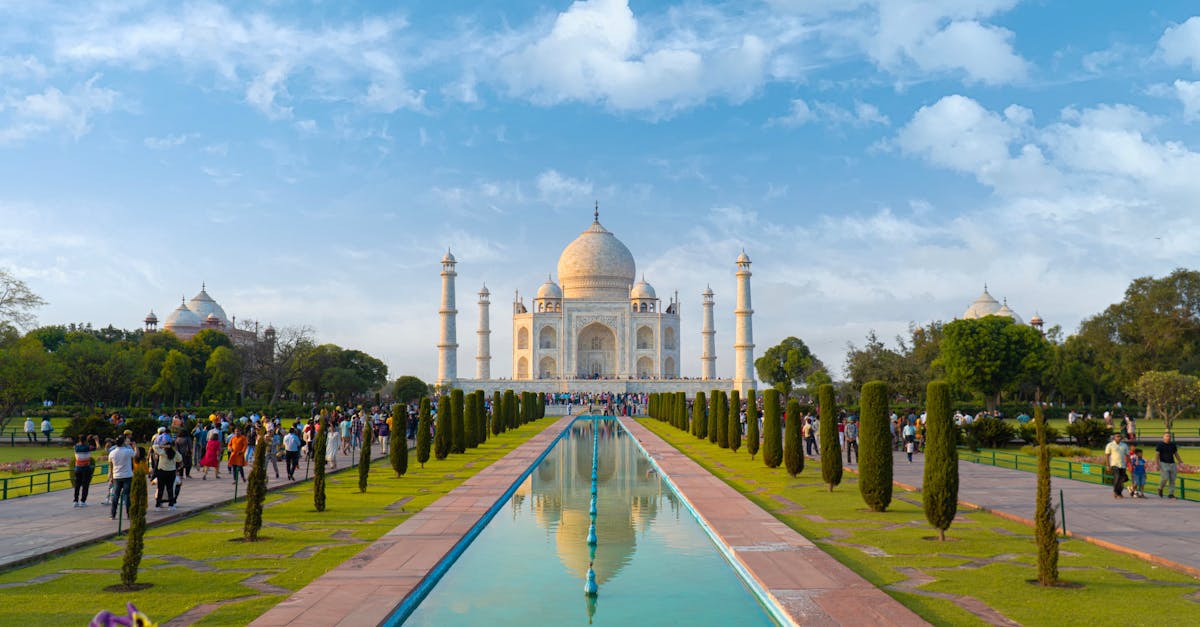
A beautiful view of the Taj Mahal in Agra, India, with clear blue skies and vibrant gardens.
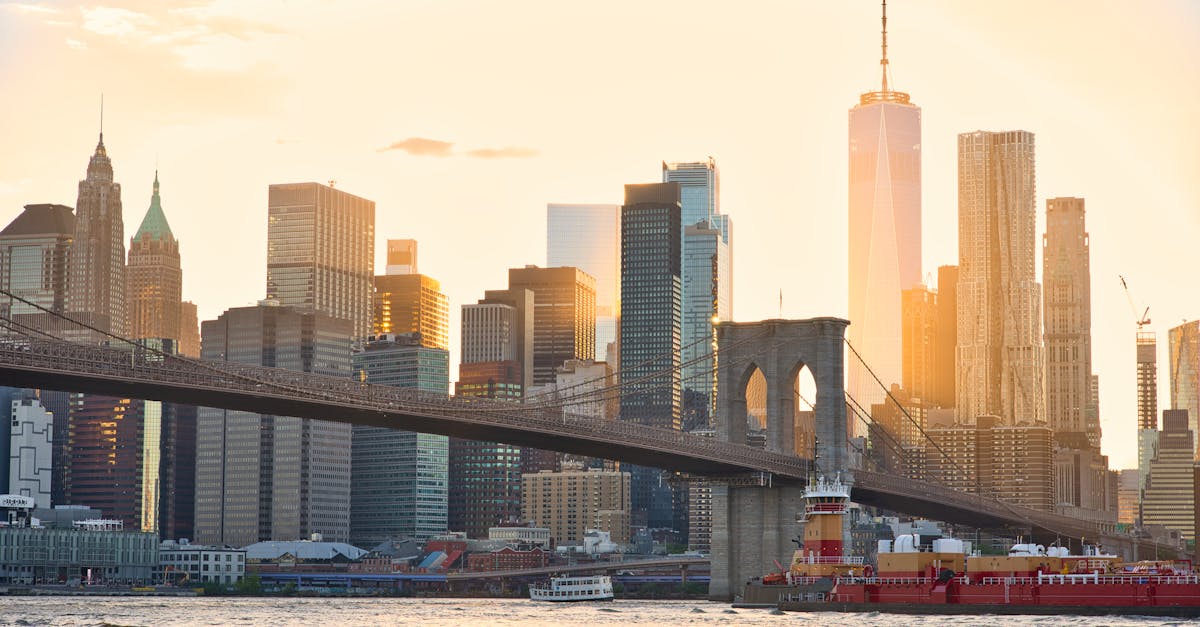
A stunning view of the Brooklyn Bridge and New York City's skyline at sunset.
IN flag
IN
US
US flag

Photos: Arto Suraj, Federico Abis · Pexels

Can an Indian traveller study in the United States?

Context

Indian passport → US H-1B: cap-subject lottery

Indian nationals are the largest single recipient cohort of H-1B visas but face the longest green-card backlog (currently 50+ years for EB-2/EB-3 employment-based green-card priority dates). H-1B itself is annually capped (65,000 + 20,000 master's exemption) with a March lottery; selection rates have been around 25–30% in recent years.

Most Indian travellers go through the embassy or consulate before they travel when heading to United States for study.

The route most travellers use is the F-1 Student Visa — United States. Stays of up to 1825 days, expect to pay around $535 in mandatory fees, processing usually takes 30–90 days.

The paperwork is heavy — approval depends heavily on the documents and circumstances you can show.

1 other route sit below if this one doesn't fit.

Straight from travel.state.gov.

Study visas have major life consequences.

Long-stay visa decisions affect your right to live, work, study, or remain with family. Always verify with a qualified immigration adviser or the destination's embassy before making travel, employment, or relocation decisions.

2 options available — review and choose the one that matches your trip.

Embassy visaStudy

F-1 Student Visa — United States

Max stay
1825days
Processing
30–90days
Fee
$535.00
Difficulty1/10·Realism6/10
Why? ▾

Difficulty

Heavy paperwork
1/10

Lots of documentation, eligibility thresholds, or a sponsor required. Start months ahead and consider professional advice.

Why this score?
  • Embassy/consulate visa application
  • -2Long processing time (up to 90 days)
  • -0.5Proof of funds required
  • -0.5Proof of accommodation required
  • -0.5Biometrics appointment required
  • -0.5Moderate documentation list (6 items)

Approval realism

Approval depends on you
6/10

Approval depends heavily on the documents and circumstances you can show. Read the warning above — it points to what tends to move the needle.

What drives this score?
  • Embassy visa applications generally succeed when documentation is complete and ties to home are clear
  • -1Indian passport → US H-1B: cap-subject lottery
Step-by-step checklist

Your application checklist

  1. 1

    Check your passport validity

    165+ days before

    Most countries require 6+ months of validity beyond your travel dates and at least one blank page. If it's close, renew before applying.

  2. 2

    Gather supporting documents

    149+ days before

    You'll need: Acceptance to a SEVP-certified US institution (Form I-20); Proof of funds covering tuition + living costs for the entire program; Strong ties to home country (no immigrant intent); SEVIS I-901 fee paid (US$350); and others (see full list above).

  3. 3

    Prepare proof of funds

    149+ days before

    Bank statements covering 3–6 months are standard. Include both savings and recent income flow — adjudicators look for stability, not just balance.

  4. 4

    Book refundable flight + accommodation

    142+ days before

    Use a refundable booking (or a free hold/itinerary service) until your visa is approved — embassies want to see real plans, but you don't want to lose the money on a refusal.

  5. 5

    Book a biometrics appointment (US embassy / consulate)

    142+ days before

    Biometrics centres often have 1–3 week waitlists. Book the slot the moment your application is submitted, not after.

  6. 6

    Submit the application to the embassy or consulate

    135+ days before

    In person at the consulate with jurisdiction over your residence. Bring originals + photocopies of every document. Most consulates require a prior appointment.

  7. 7

    Track the application; print the approval

    7+ days before

    Decisions typically take 30–90 days. Print or save a clear PDF of the approved visa — airlines check this at check-in.

  8. 8

    On the day of travel

    day of travel

    Carry: passport (printed visa if applicable), onward ticket, proof of accommodation, proof of funds, travel insurance. Border officers retain discretion regardless of visa status.

Show full requirements, fees, and source
Passport valid 6+ monthsProof of fundsProof of accommodationBiometrics (US embassy / consulate)

What you need

  • Acceptance to a SEVP-certified US institution (Form I-20)
  • Proof of funds covering tuition + living costs for the entire program
  • Strong ties to home country (no immigrant intent)
  • SEVIS I-901 fee paid (US$350)
  • DS-160 online non-immigrant visa application
  • On-campus work (20 hrs/week) permitted; OPT extension after graduation (12 months, +24 STEM)

Fee breakdown

  • MRV non-immigrant visa fee$185.00
  • SEVIS I-901 fee$350.00
View primary source (travel.state.gov)
Embassy visaStudy

J-1 Exchange Visitor — United States

Max stay
365days
Processing
14–60days
Fee
$405.00
Difficulty1/10·Realism6/10
Why? ▾

Difficulty

Heavy paperwork
1/10

Lots of documentation, eligibility thresholds, or a sponsor required. Start months ahead and consider professional advice.

Why this score?
  • Embassy/consulate visa application
  • -2Long processing time (up to 60 days)
  • -0.5Proof of funds required
  • -0.5Biometrics appointment required
  • -1Long documentation list (7 items)

Approval realism

Approval depends on you
6/10

Approval depends heavily on the documents and circumstances you can show. Read the warning above — it points to what tends to move the needle.

What drives this score?
  • Embassy visa applications generally succeed when documentation is complete and ties to home are clear
  • -1Indian passport → US H-1B: cap-subject lottery
Step-by-step checklist

Your application checklist

  1. 1

    Check your passport validity

    120+ days before

    Most countries require 6+ months of validity beyond your travel dates and at least one blank page. If it's close, renew before applying.

  2. 2

    Gather supporting documents

    104+ days before

    You'll need: Form DS-2019 issued by a US Department of State–designated sponsor; SEVIS I-901 fee paid (US$220 for most categories, $35 au-pair); Acceptance into one of 14 J-1 programme categories (research scholar, student intern, au pair, camp counsellor, summer work travel, etc.); Proof of funds to cover the programme; and others (see full list above).

  3. 3

    Prepare proof of funds

    104+ days before

    Bank statements covering 3–6 months are standard. Include both savings and recent income flow — adjudicators look for stability, not just balance.

  4. 4

    Book a biometrics appointment (US embassy / consulate)

    97+ days before

    Biometrics centres often have 1–3 week waitlists. Book the slot the moment your application is submitted, not after.

  5. 5

    Submit the application to the embassy or consulate

    90+ days before

    In person at the consulate with jurisdiction over your residence. Bring originals + photocopies of every document. Most consulates require a prior appointment.

  6. 6

    Track the application; print the approval

    7+ days before

    Decisions typically take 14–60 days. Print or save a clear PDF of the approved visa — airlines check this at check-in.

  7. 7

    On the day of travel

    day of travel

    Carry: passport (printed visa if applicable), onward ticket, proof of accommodation, proof of funds, travel insurance. Border officers retain discretion regardless of visa status.

Show full requirements, fees, and source
Passport valid 6+ monthsProof of fundsBiometrics (US embassy / consulate)

What you need

  • Form DS-2019 issued by a US Department of State–designated sponsor
  • SEVIS I-901 fee paid (US$220 for most categories, $35 au-pair)
  • Acceptance into one of 14 J-1 programme categories (research scholar, student intern, au pair, camp counsellor, summer work travel, etc.)
  • Proof of funds to cover the programme
  • Strong ties to home country (no immigrant intent)
  • Health insurance meeting J-1 minimums for the duration of the programme
  • 212(e) two-year home-residency requirement may apply

Fee breakdown

  • DS-160 application fee$185.00
  • SEVIS I-901 fee$220.00
View primary source (j1visa.state.gov)

What you'll need

Study visa for United States

Specific to Indian passport holders.

Start ~0–12 weeks before your intended travel date.

Order these first — they have the longest lead time

  • Education credentials evaluation

    Credentials4–12 weeks

    WES (Canada/US), ECE, IQAS, UK ENIC, or the destination's local equivalent — converts your foreign degree to the local framework.

    How: Order online; allow 4–10 weeks. Request your university to send transcripts directly to the assessor.

  • University admission letter

    Purpose evidence2–9 weeks

    An unconditional offer (I-20 for US, CAS for UK, CoE for Australia, CAQ + Letter of Acceptance for Canada).

    How: Issued by your university once you've accepted the offer and paid the deposit.

  • English- / language-proficiency test

    Credentials3–9 weeks

    IELTS, TOEFL, PTE, DELE, TestDaF, JLPT — depending on the destination. Most have minimum scores per visa class.

    How: IELTS via British Council India or IDP — usually a slot within 2–3 weeks; results 5–7 days post-test (or 1 day for IELTS Computer).

  • Police certificate

    Background1–4 weeks

    A criminal-record clearance from every country you've lived in for 6+ months in the past 10 years. Universally required for work, study, family and PR routes.

    How: PCC issued by your regional passport office (passportindia.gov.in) or local SP — typically 1–3 weeks, longer if your address has changed in the past 5 years.

  • Medical examination

    Medical1–4 weeks

    Conducted by a panel physician approved by the destination's immigration authority. Includes chest X-ray, blood tests, and an interview.

    How: Book directly with a panel physician — find them on the destination's immigration website.

  • Apostille / certified document copies

    Credentials1–4 weeks

    Hague Apostille on civil documents (birth, marriage, education certificates) for countries that recognise the convention. Other countries require consular legalisation instead.

    How: US: state Secretary of State or US State Dept. UK: FCDO Legalisation Office. Other: ministry of foreign affairs of the issuing country.

  • Valid passport

    Identity0–3 weeks

    Most countries require your passport to be valid for at least six months beyond your departure date, with two or more blank pages.

    How: Renew at passportindia.gov.in — 7–21 days normal, 1–3 days tatkal (₹2,000 extra).

Then gather these

  • Biometrics (fingerprints + photo)

    Background1–4 weeks

    Captured at a Visa Application Centre (VFS, BLS, TLScontact). Walk-in is rarely possible — appointment slots fill up.

    How: Book on the VAC website after submitting your online application.

  • Certified translation of documents

    Credentials1–2 weeks

    If your documents are not in the destination's official language, you may need a sworn or certified translator.

    How: ATA-certified (US) / ITI-qualified (UK) translators, or a sworn translator registered with the destination's consulate.

  • Proof of funds (long-stay)

    Financial1–2 weeks

    Country-specific minimum savings — e.g. ~CAD 14,000 (Canada study/work permits, single applicant), ~£1,334/month + £8,000 reserve (UK family), proof of income for digital-nomad routes.

    How: Bank statements going back 3–6 months, sometimes a sworn affidavit of support from a sponsor.

  • Tuition payment receipt

    Financial1–7 days

    Many study visas require a first-semester or full-year tuition payment receipt as proof of funds.

    How: Issued by your university after you pay the deposit.

  • Passport-style photograph

    Identity1–3 days

    A recent biometric photo to the destination's specifications. Most consulates require their own dimensions, not your home country's.

    How: Any high-street photo studio, or app-based services that meet ICAO 9303 spec.

  • Online visa application form

    Application1–3 days

    The destination's online form (DS-160 for US, gov.uk for UK, IRCC portal for Canada, ImmiAccount for Australia, e-Visa portal for most others).

    How: Apply directly on the destination government website — never via a third-party paid service.

  • Application fee payment

    Application1 day

    Payable to the destination government directly. Fees range from ~$25 (e-Visas) to $2,500+ (US EB-1).

    How: Card payment on the destination's portal. Receipt required for the application.

Lead times are global averages. Country-specific channels can be faster (FBI Channeler in days vs FBI Mail in months) — always check the destination's embassy or visa portal for current timelines.

Make your case

★ Hand-written for this route

Tailored guidance — Indian applying for a study visa to United States

The same things a £1,000 immigration consultation would tell you — what evidenceUnited States's caseworkers actually weight, a personal-statement skeleton you can adapt to United States's framing, common mistakes that get indian applications refused, and when it's worth hiring a lawyer.

What caseworkers actually weight

  1. 1

    I-20 from a SEVP-certified institution

    Your I-20 (Form I-20 issued by the US institution) is THE document for F-1 — not just an offer letter. It carries a unique SEVIS ID, lists your programme, projected completion date, and certified financial figure. Indian institutions sometimes issue 'admission letters' that aren't valid for visa application — only the I-20 is.

  2. 2

    Financial documentation matching the I-20 figure

    Your I-20 states a financial-resources figure (e.g. US$72,000/year for an Ivy League Master's). You must show LIQUID FUNDS matching this for Year 1 + 'sufficient resources' for remaining years. Indian banks' FDR statements work, but caseworkers cross-check against your ITRs (Income Tax Returns) — your stated sponsor's income should plausibly support the bank balance.

  3. 3

    DS-160 + visa interview at US Embassy / Consulate

    Mumbai, New Delhi, Chennai, Kolkata, Hyderabad embassies. Wait times for Indian F-1 appointments stretch 4-8 weeks in peak season (April-July). Apply EARLY. The interview is 3-5 minutes — the officer assesses your genuine-student credibility based on your DS-160 and interview composure.

  4. 4

    SEVIS I-901 fee — US$350 paid before interview

    Often forgotten. SEVIS I-901 must be paid 3+ business days before the visa interview, payable at fmjfee.com. Bring the printed receipt to the interview — no receipt = no interview.

  5. 5

    Visa fee MRV — US$185 + biometrics

    MRV (Machine Readable Visa) fee paid before the interview. Plus VAC biometrics fee. Total: ~US$350 + visa fee. Some Indian agents take 'service fees' on top — book directly through the US Embassy India site (ustraveldocs.com) to avoid markup.

Personal-statement skeleton

Fill in each section with your own facts, dates, and details. The structure mirrors what caseworkers expect to find.

  1. 1. Genuine student intent (the F-1 interview's central question)

    Why this specific course? What did you study before? Why the USA and not the UK / Canada / Australia? The DS-160 + interview both probe genuine-student intent. Concrete answers: 'My undergraduate was in computer engineering at NIT Trichy with a focus on machine learning. The MS at Carnegie Mellon's School of Computer Science has a specific track in AI Safety taught by [Professor X], whose work on [Y] aligns with my undergraduate thesis on [Z].'

  2. 2. Funding source explained line by line

    Parents fund: 'My father is a [profession] earning ₹[X] per year (verifiable via ITR for FY 2024-25), my mother is [Y]. They have committed [bank account number] holding ₹[Z] for my education.' Self-fund: salary slips + savings + FDs. Loan: SBI / Axis / HDFC sanction letter.

  3. 3. Ties to India (the 'return home' test)

    Family, property, ongoing business interests, job offers, ancestral land. Caseworkers ask: 'What stops you from staying in the US after graduation?' Honest answer: 'I plan to use OPT (Optional Practical Training) for 1-3 years industry experience, then either pursue H-1B sponsorship or return to India to apply skills.' Both intents are valid — vagueness is fatal.

  4. 4. Post-study plan honestly

    STEM degrees get 36-month OPT (3 years). Non-STEM get 12 months. H-1B lottery has ~20% odds in 2026. State your intent: 'I plan to use OPT for industry experience, apply for H-1B in cycles 2027-2030, with the option of returning to India to apply learned skills if H-1B isn't successful.'

  5. 5. Why your prior education prepares you

    Connect undergrad GPA, projects, publications, work experience to the chosen Master's. Indian engineering graduates from IIT / NIT / BITS clear visa interviews more reliably — the credentials are well-recognised. Tier-2 Indian colleges need stronger justification of upward fit.

Mistakes that cost real money

  • Apply for the visa appointment as soon as your I-20 arrives. April-July is peak Indian student-visa season — December-March applications get appointments faster.
  • Don't use 'visa-counsellor' services for ₹50,000-100,000. The DS-160 and visa interview prep are well-documented on official US Embassy India pages. The fee adds zero value for clean applications.
  • STEM OPT extension (24 additional months beyond the standard 12) is FREE — applies automatically to designated STEM CIP codes. Verify your programme's CIP code is on the STEM list BEFORE accepting the offer.
  • Many Indian banks offer 'education loans for US studies' at preferential rates (SBI Global Edvantage, HDFC Credila, Axis Bank Education Loan). Compare against ICICI Bank Education Loan + EMI Moratorium — terms vary by ~2-3% interest, materially impacting total cost.
  • Don't apply for ED visa (vocational training) when you mean F-1 (academic). They're different categories — Indian agents sometimes route applications wrongly. F-1 is what 95%+ of Indian students need.
  • Health insurance: most US universities mandate Aetna / Cigna student plans (~US$2,500/year). Compare against ISO Student Health Insurance — often cheaper if the university allows external plans.

DIY or hire a lawyer?

✓ DIY is fine if

  • Direct undergrad-to-graduate progression at a US Top-100 institution (IIT graduate → Stanford MS, etc.)
  • Clean documentation, parents' / self-funded, no prior US visa refusal

⚠ Get a specialist if

  • Prior F-1 / B1-B2 refusal at any US Embassy — the 214(b) refusal stays on your record
  • Funding via crypto, family business income, or non-standard sources — provenance scrutiny is intense for Indian applications
  • Older 'mature' student or career-changer applicant (>30 years old applying for first Master's)
  • F-2 dependent application for spouse + children — F-2 has limited work rights, complexity in interview
  • Background includes any criminal record, immigration violation in any country, or visa overstay anywhere
This guidance is general — not legal advice. For high-stakes routes (refusal history, criminal record, complex finances), spend the money on a qualified immigration adviser regulated by your destination (UK: OISC / SRA; AU: MARA; US: bar-admitted attorney).

Email me if United States's policy changes

ONE email when the rules change for Indian travellers. No account, no marketing.

Other visa types for this route

We also have data on these visa categories between IN and US.

Related routes

Compare other study-visa routes

Sources & references

Every link below is a primary government source. We aggregate; the source is the authority. If anything on this page disagrees with a link below, the link wins.

Sponsored

While you're sorting your trip to United States

We earn a small commission on bookings made via these links — it helps keep the visa tool free. The visa info above is independent of any partner. Our commercial policy →

Browse other destinations

Where can Indian passport holders go?

Other passports visiting United States

Who needs a visa for United States?

Informational only. A valid visa permits entry subject to officer discretion at the border. Always verify with the destination's embassy or official source before travel, employment, or relocation.