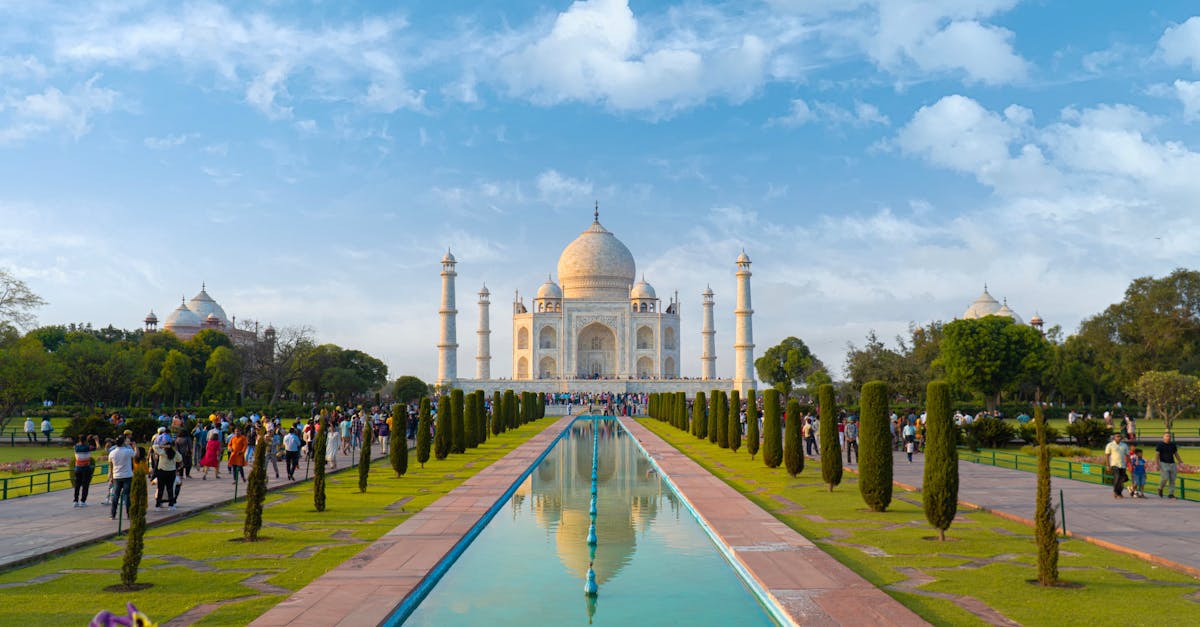
A beautiful view of the Taj Mahal in Agra, India, with clear blue skies and vibrant gardens.
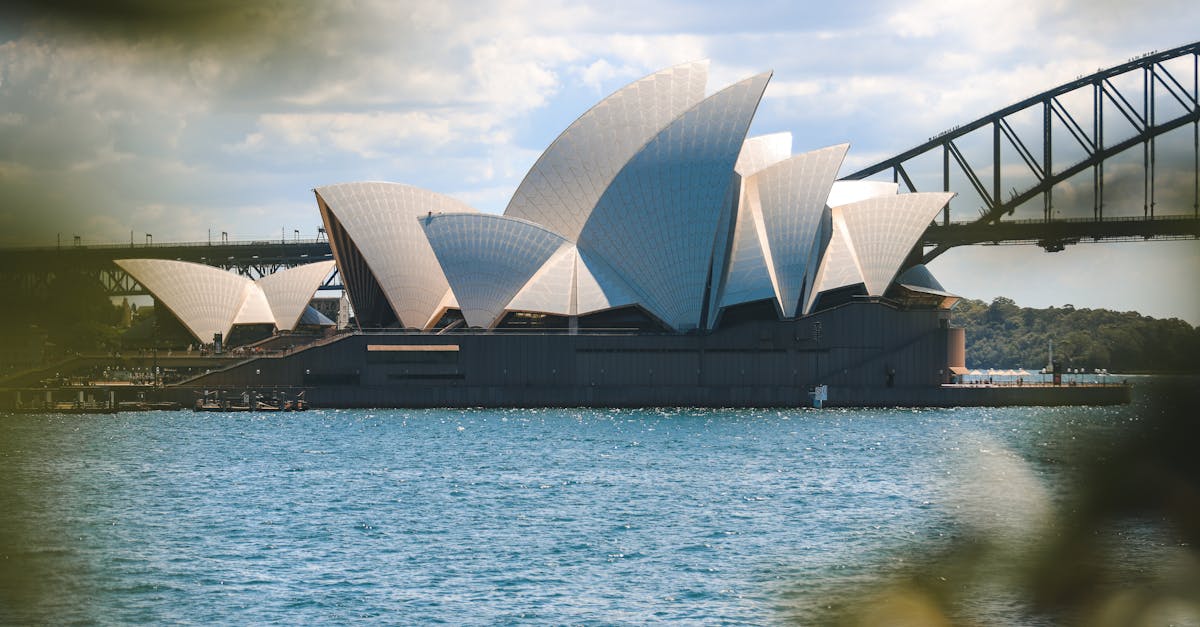
Iconic view of the Sydney Opera House and Sydney Harbor Bridge on a sunny day.
IN flag
IN
AU
AU flag

Photos: Arto Suraj, Moritz Feldmann · Pexels

Can an Indian traveller study in Australia?

Most Indian travellers apply for an e-Visa online before they travel — it's a quick form, usually approved within a few days when heading to Australia for study.

The route most travellers use is the Student visa (Subclass 500). Stays go up to 1825 days per visit, expect to pay around A$1,600 in mandatory fees, processing usually takes 21–84 days.

There's a moderate amount of paperwork — approval is likely if your documents are in order.

Straight from immi.homeaffairs.gov.au.

Study visas have major life consequences.

Long-stay visa decisions affect your right to live, work, study, or remain with family. Always verify with a qualified immigration adviser or the destination's embassy before making travel, employment, or relocation decisions.

e-VisaStudy

Student visa (Subclass 500)

Max stay
1825days
Processing
21–84days
Fee
A$1,600.00≈ $1,159
Difficulty4/10·Realism8/10
Why? ▾

Difficulty

Moderate paperwork
4/10

Some paperwork and processing time. Start a few weeks ahead.

Why this score?
  • Online e-Visa — no embassy appointment
  • -2Long processing time (up to 84 days)
  • -0.5Proof of funds required
  • -0.5Moderate documentation list (6 items)
  • -0.5Language requirement (IELTS / TOEFL / PTE / OET / Cambridge — varies by provider)

Approval realism

Approval is likely
8/10

Most applicants with the right paperwork get approved.

What drives this score?
  • e-Visa applications are commonly approved when documentation is complete

Student visa details

Institution accreditation
Required
Part-time work
Up to 48 hours/week
English requirement
IELTS / TOEFL / PTE / OET / Cambridge — varies by provider
Step-by-step checklist

Your application checklist

  1. 1

    Check your passport validity

    156+ days before

    Most countries require 6+ months of validity beyond your travel dates and at least one blank page. If it's close, renew before applying.

  2. 2

    Gather supporting documents

    140+ days before

    You'll need: Confirmation of Enrolment (CoE) from a CRICOS-registered provider; Genuine Student (GS) requirement — replaces the former Genuine Temporary Entrant; Overseas Student Health Cover (OSHC) for the visa duration; Sufficient funds: tuition + AUD 24,505 living costs per 12 months (single); and others (see full list above).

  3. 3

    Prepare proof of funds

    140+ days before

    Bank statements covering 3–6 months are standard. Include both savings and recent income flow — adjudicators look for stability, not just balance.

  4. 4

    Submit the e-Visa application online

    126+ days before

    Apply directly at the official portal. Save the reference number — you'll need it for arrival.

  5. 5

    Track the application; print the approval

    7+ days before

    Decisions typically take 21–84 days. Print or save a clear PDF of the approved visa — airlines check this at check-in.

  6. 6

    On the day of travel

    day of travel

    Carry: passport (printed visa if applicable), onward ticket, proof of accommodation, proof of funds, travel insurance. Border officers retain discretion regardless of visa status.

Show full requirements, fees, and source
Passport valid 6+ monthsProof of funds

What you need

  • Confirmation of Enrolment (CoE) from a CRICOS-registered provider
  • Genuine Student (GS) requirement — replaces the former Genuine Temporary Entrant
  • Overseas Student Health Cover (OSHC) for the visa duration
  • Sufficient funds: tuition + AUD 24,505 living costs per 12 months (single)
  • English language proficiency at the level required by your provider
  • Health and character requirements

Fee breakdown

  • Application charge (primary applicant)A$1,600.00≈ $1,159
View primary source (immi.homeaffairs.gov.au)

What you'll need

Study visa for Australia

Specific to Indian passport holders.

Start ~0–12 weeks before your intended travel date.

Order these first — they have the longest lead time

  • Education credentials evaluation

    Credentials4–12 weeks

    WES (Canada/US), ECE, IQAS, UK ENIC, or the destination's local equivalent — converts your foreign degree to the local framework.

    How: Order online; allow 4–10 weeks. Request your university to send transcripts directly to the assessor.

  • University admission letter

    Purpose evidence2–9 weeks

    An unconditional offer (I-20 for US, CAS for UK, CoE for Australia, CAQ + Letter of Acceptance for Canada).

    How: Issued by your university once you've accepted the offer and paid the deposit.

  • English- / language-proficiency test

    Credentials3–9 weeks

    IELTS, TOEFL, PTE, DELE, TestDaF, JLPT — depending on the destination. Most have minimum scores per visa class.

    How: IELTS via British Council India or IDP — usually a slot within 2–3 weeks; results 5–7 days post-test (or 1 day for IELTS Computer).

  • Police certificate

    Background1–4 weeks

    A criminal-record clearance from every country you've lived in for 6+ months in the past 10 years. Universally required for work, study, family and PR routes.

    How: PCC issued by your regional passport office (passportindia.gov.in) or local SP — typically 1–3 weeks, longer if your address has changed in the past 5 years.

  • Medical examination

    Medical1–4 weeks

    Conducted by a panel physician approved by the destination's immigration authority. Includes chest X-ray, blood tests, and an interview.

    How: Book directly with a panel physician — find them on the destination's immigration website.

  • Apostille / certified document copies

    Credentials1–4 weeks

    Hague Apostille on civil documents (birth, marriage, education certificates) for countries that recognise the convention. Other countries require consular legalisation instead.

    How: US: state Secretary of State or US State Dept. UK: FCDO Legalisation Office. Other: ministry of foreign affairs of the issuing country.

  • Valid passport

    Identity0–3 weeks

    Most countries require your passport to be valid for at least six months beyond your departure date, with two or more blank pages.

    How: Renew at passportindia.gov.in — 7–21 days normal, 1–3 days tatkal (₹2,000 extra).

Then gather these

  • Biometrics (fingerprints + photo)

    Background1–4 weeks

    Captured at a Visa Application Centre (VFS, BLS, TLScontact). Walk-in is rarely possible — appointment slots fill up.

    How: Book on the VAC website after submitting your online application.

  • Certified translation of documents

    Credentials1–2 weeks

    If your documents are not in the destination's official language, you may need a sworn or certified translator.

    How: ATA-certified (US) / ITI-qualified (UK) translators, or a sworn translator registered with the destination's consulate.

  • Proof of funds (long-stay)

    Financial1–2 weeks

    Country-specific minimum savings — e.g. ~CAD 14,000 (Canada study/work permits, single applicant), ~£1,334/month + £8,000 reserve (UK family), proof of income for digital-nomad routes.

    How: Bank statements going back 3–6 months, sometimes a sworn affidavit of support from a sponsor.

  • Tuition payment receipt

    Financial1–7 days

    Many study visas require a first-semester or full-year tuition payment receipt as proof of funds.

    How: Issued by your university after you pay the deposit.

  • Passport-style photograph

    Identity1–3 days

    A recent biometric photo to the destination's specifications. Most consulates require their own dimensions, not your home country's.

    How: Any high-street photo studio, or app-based services that meet ICAO 9303 spec.

  • Online visa application form

    Application1–3 days

    The destination's online form (DS-160 for US, gov.uk for UK, IRCC portal for Canada, ImmiAccount for Australia, e-Visa portal for most others).

    How: Apply directly on the destination government website — never via a third-party paid service.

  • Application fee payment

    Application1 day

    Payable to the destination government directly. Fees range from ~$25 (e-Visas) to $2,500+ (US EB-1).

    How: Card payment on the destination's portal. Receipt required for the application.

Lead times are global averages. Country-specific channels can be faster (FBI Channeler in days vs FBI Mail in months) — always check the destination's embassy or visa portal for current timelines.

Make your case

★ Hand-written for this route

Tailored guidance — Indian applying for a study visa to Australia

The same things a £1,000 immigration consultation would tell you — what evidenceAustralia's caseworkers actually weight, a personal-statement skeleton you can adapt to Australia's framing, common mistakes that get indian applications refused, and when it's worth hiring a lawyer.

What caseworkers actually weight

  1. 1

    Subclass 500 Student Visa + Confirmation of Enrolment (CoE)

    India is Australia's 2nd-largest international student source (~125,000 enrolments after the 2024 surge). Your Australian institution issues CoE via PRISMS once you accept the offer and pay initial fees. Subclass 500 fee raised to AUD$1,600 from 1 July 2024. Indian applicants are 'Assessment Level 2' under SSVF — middle scrutiny tier, more documentation than Indonesians/Malaysians but less than Pakistanis or Nepalese. Verified-trustworthy institutions (Group of Eight + most large public universities) get smoother CoE processing.

  2. 2

    Genuine Student (GS) requirement — replaced GTE in March 2024, plus tightened source-of-funds

    From 23 March 2024 GTE was replaced by Genuine Student test. Indian applications face heightened scrutiny — Department of Home Affairs has flagged 'cookie-cutter' applications from Punjab/Haryana/Telangana agents. In 2024 Australia introduced 'Migration Strategy' caps on dodgy private VET colleges; choose CRICOS-listed institutions with strong reputations. Show 12+ months of consistent family income/assets, not lump-sum 'demonstration deposits' 30 days before application.

  3. 3

    OSHC + financial capacity AUD$29,710/year + IELTS 6.0+ / PTE 50+

    Overseas Student Health Cover from Bupa, Medibank, Allianz, NIB, AHM (single ~AUD$700-850/year, family AUD$3,500-5,000/year). Financial capacity from 10 May 2024: AUD$29,710/year living costs + tuition + AUD$2,500 travel. English: IELTS Academic 6.0+ (no band below 5.5) for most UG, 6.5+ for PG; PTE Academic 50+ / 58+ accepted; TOEFL iBT 60+ / 79+ accepted. Universities often have 'English Language Bridge' pathway for marginal scorers.

  4. 4

    Indian academic documents — apostilled via MEA + WES/credential evaluation

    Indian 10+2 (CBSE / ICSE / state board), Bachelor's (3-year or 4-year), and Master's transcripts need apostille via MEA (Ministry of External Affairs India) e-Sanad portal — India is a Hague Convention signatory since 2005. Cost INR 50-200 per document, 3-7 working days. Some 3-year Indian Bachelor's may not meet Australian PG entry requirements — universities often require 'bridging' or accept Indian 4-year tech / honours / professional degrees directly. WES is requested for some PG programmes (separate from the visa application).

Personal-statement skeleton

Fill in each section with your own facts, dates, and details. The structure mirrors what caseworkers expect to find.

  1. Why Australia, why this institution

    Many Indian students choose Australia for Group of Eight prestige (Melbourne, ANU, Sydney, UNSW, Monash, UQ, UWA, Adelaide) and the lifestyle, plus the Subclass 485 Temporary Graduate Visa pathway. Explain specifically why your chosen programme over Indian top universities (IIT, IIM, NIT, IISc, IIIT, BITS, NLU) or alternative destinations (US, UK, Canada). Reference specific elements: faculty research area, course coursework, industry placement, regional advantage.

  2. Course-career link — pathway honesty under GS test

    Map your Indian background to the Australian course to your career. Be specific: 'IIT Madras B.Tech Computer Science → UNSW Master of Information Technology → return to Bangalore/Hyderabad tech sector at Microsoft / Google / Amazon / Adobe / Flipkart, OR pursue Subclass 485 for 2-3 years Australian work first.' GS test allows expression of pathway intent — don't pretend you have no Australian work intent if your CV and family conversation suggest otherwise. Indian agents have trained applicants to lie; visa officers cross-check.

  3. Funding — Indian family / education loan / scholarship

    Quantify: tuition AUD$X, living AUD$29,710, total Year 1 AUD$Z. Then show coverage: family contribution INR X (with bank statement, parents' Income Tax Return for last 3 years, family business GST filings if business-owner), education loan from HDFC Credila / Avanse / SBI / Axis Bank / Punjab National Bank (Indian banks accept Australian CoE for INR 40 lakh-1.5 crore education loans at 9-12% interest). Australia Awards scholarships are not available to Indian citizens; Charles Sturt, Deakin, Monash, UTS have institutional scholarships.

  4. Family ties + future plan

    List parents (occupation, location — Mumbai / Delhi / Bangalore / Hyderabad / Chennai / Kolkata / Ahmedabad metro level), siblings, partner. Mention Indian property — family home with Khata / Patta / Bhulekh / 7/12 utara in parents' name, agricultural land, Indian bank accounts, expected return-job opportunity (named Indian employer or family business). For male applicants, post-graduation plan should bridge Australian work intent (485 visa) with eventual Indian return OR PR pathway — don't oversell either direction.

Mistakes that cost real money

  • Subclass 500 visa fee is AUD$1,600 — no discount; each dependent adds AUD$440 (under 18) or AUD$1,190 (over 18)
  • Don't pay 'IDP' or 'Y-Axis' or 'Aussizz' agents INR 2-5 lakh for what's a free DHA ImmiAccount online application — these agencies overcharge for university placement (often free from universities directly)
  • Group of Eight scholarships — Melbourne International Scholarship, UNSW International Scholarship, USyd India Excellence, UQ India Excellence, ANU India, Monash Indian Excellence; all open to high-performing Indians (15-50% tuition waivers)
  • HDFC Credila, Avanse, ICICI, SBI Global Ed Vantage offer education loans at 9-12% with Australian CoE as collateral; tax benefits under Section 80E for the interest paid
  • OSHC: compare directly at privatehealth.gov.au — Bupa and Medibank single student covers at AUD$650-850/year; don't bundle through agent
  • PTE Academic test in India is INR 17,000 (Pearson Vue centres in Delhi, Mumbai, Bangalore, Chennai, Hyderabad, Pune, Kolkata) — slightly cheaper than IELTS (INR 17,000-17,800)
  • Use HDFC Forex, ICICI Forex, or Axis Forex Online for tuition transfers — Forex cards lock in rate; RBI educational outflow under LRS allows USD 250,000/year with admission proof
  • Apostille via MEA e-Sanad portal directly (INR 50-200/document) — don't use 'apostille agencies' charging INR 1,500-3,000/document

DIY or hire a lawyer?

✓ DIY is fine if

  • Standard Subclass 500 with Go8 / top-50 university CoE, clean record, clear funding via education loan or family
  • Dependent visa applications (spouse + children) concurrent with main applicant
  • Subclass 485 Temporary Graduate Visa application after 2+ years study completion
  • Course change or institution change within same visa (notify provider)
  • OSHC switch / renewal during visa term

⚠ Get a specialist if

  • Prior Australian visa refusal (visitor, study, work) — refusal grounds carry forward to GS assessment
  • Past Australian student visa cancellation (attendance below 80%, course non-progression)
  • Indian criminal record (even minor — narcotics under NDPS Act is absolute disqualifier)
  • Funding from a sponsor outside immediate family (distant relatives, business sponsor, third-country sponsor — common Indian application red flag)
  • Application from Punjab / Haryana / Andhra-Telangana with private VET / private college CoE (DHA has flagged this combination)
  • Past Five Eyes visa refusal (US, UK, Canada, NZ) flagged on Australian database
  • Family member with prior Australian asylum claim from India
  • Switching from non-CRICOS course to CRICOS course mid-stream
  • Application after Subclass 482 sponsored employer's licence revocation (rare but increasingly common in care sector)
  • Pre-existing partner / fiancée in Australia (combined Subclass 500 + 309 considerations)
This guidance is general — not legal advice. For high-stakes routes (refusal history, criminal record, complex finances), spend the money on a qualified immigration adviser regulated by your destination (UK: OISC / SRA; AU: MARA; US: bar-admitted attorney).

Email me if Australia's policy changes

ONE email when the rules change for Indian travellers. No account, no marketing.

Other visa types for this route

We also have data on these visa categories between IN and AU.

Related routes

Compare other study-visa routes

Sources & references

Every link below is a primary government source. We aggregate; the source is the authority. If anything on this page disagrees with a link below, the link wins.

Sponsored

While you're sorting your trip to Australia

We earn a small commission on bookings made via these links — it helps keep the visa tool free. The visa info above is independent of any partner. Our commercial policy →

Browse other destinations

Where can Indian passport holders go?

Other passports visiting Australia

Who needs a visa for Australia?

Informational only. A valid visa permits entry subject to officer discretion at the border. Always verify with the destination's embassy or official source before travel, employment, or relocation.