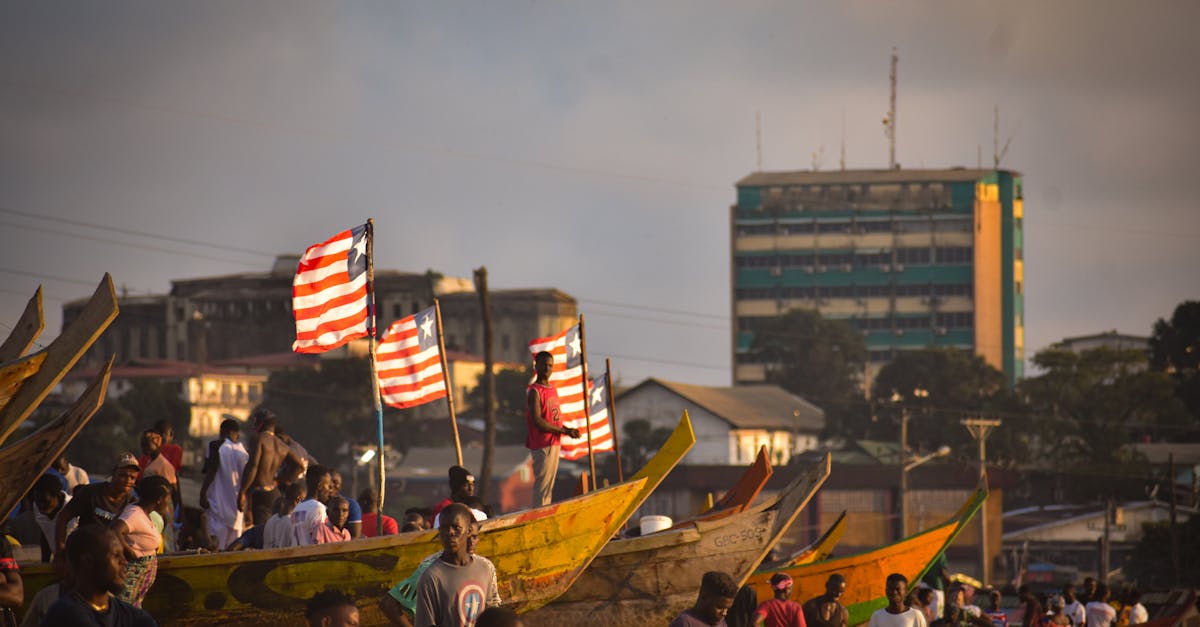
Vibrant scene of fishermen and canoes along the Monrovia coast during day.
CI flag
CI
TH
TH flag

Photo: Isiaka D. Massalay · Pexels

Can an Ivorian traveller work in Thailand?

Most Ivorian travellers go through the embassy or consulate before they travel when heading to Thailand for work.

The route most travellers use is the Long-Term Resident (LTR) Visa — Thailand. Stays of up to 3650 days, expect to pay around THB 50,000 in mandatory fees, processing usually takes 25–60 days.

The paperwork is heavy — approval is likely if your documents are in order.

6 other routes sit below if this one doesn't fit.

Straight from ltr.boi.go.th.

Work visas have major life consequences.

Long-stay visa decisions affect your right to live, work, study, or remain with family. Always verify with a qualified immigration adviser or the destination's embassy before making travel, employment, or relocation decisions.

7 options available — review and choose the one that matches your trip.

Embassy visaWork

Long-Term Resident (LTR) Visa — Thailand

Max stay
3650days
Processing
25–60days
Fee
THB 50,000.00≈ $1,552
Difficulty2/10·Realism8/10
Why? ▾

Difficulty

Heavy paperwork
2/10

Lots of documentation, eligibility thresholds, or a sponsor required. Start months ahead and consider professional advice.

Why this score?
  • Embassy/consulate visa application
  • +0.5Mid-strength baseline — e-Visa eligibility on tourism
  • -2Long processing time (up to 60 days)
  • -0.5Proof of funds required
  • -0.5Biometrics appointment required
  • -0.5Moderate documentation list (5 items)

Approval realism

Approval is likely
8/10

Most applicants with the right paperwork get approved.

What drives this score?
  • Embassy visa applications generally succeed when documentation is complete and ties to home are clear
  • +0.5e-Visa-eligible baseline — moderate approval-rate boost
Step-by-step checklist

Your application checklist

  1. 1

    Check your passport validity

    120+ days before

    Most countries require 6+ months of validity beyond your travel dates and at least one blank page. If it's close, renew before applying.

  2. 2

    Gather supporting documents

    104+ days before

    You'll need: Threshold: Four streams: Wealthy Global Citizen (US$1m+ assets), Wealthy Pensioner (US$80k income), Work-from-Thailand Pro (US$80k income from foreign company), Highly-Skilled Professional (US$80k+ in target sectors).; Income / assets meeting one of the four streams (see threshold summary); Minimum US$50k health insurance for the duration of stay; Spouse and up to 4 dependent children can accompany; and others (see full list above).

  3. 3

    Prepare proof of funds

    104+ days before

    Bank statements covering 3–6 months are standard. Include both savings and recent income flow — adjudicators look for stability, not just balance.

  4. 4

    Book a biometrics appointment (embassy / consulate / VFS centre)

    97+ days before

    Biometrics centres often have 1–3 week waitlists. Book the slot the moment your application is submitted, not after.

  5. 5

    Submit the application to the embassy or consulate

    90+ days before

    In person at the consulate with jurisdiction over your residence. Bring originals + photocopies of every document. Most consulates require a prior appointment.

  6. 6

    Track the application; print the approval

    7+ days before

    Decisions typically take 25–60 days. Print or save a clear PDF of the approved visa — airlines check this at check-in.

  7. 7

    On the day of travel

    day of travel

    Carry: passport (printed visa if applicable), onward ticket, proof of accommodation, proof of funds, travel insurance. Border officers retain discretion regardless of visa status.

Show full requirements, fees, and source
Passport valid 6+ monthsProof of fundsBiometrics (embassy / consulate / VFS centre)

What you need

  • Threshold: Four streams: Wealthy Global Citizen (US$1m+ assets), Wealthy Pensioner (US$80k income), Work-from-Thailand Pro (US$80k income from foreign company), Highly-Skilled Professional (US$80k+ in target sectors).
  • Income / assets meeting one of the four streams (see threshold summary)
  • Minimum US$50k health insurance for the duration of stay
  • Spouse and up to 4 dependent children can accompany
  • Reduced personal income tax (17%) on foreign income for the Highly-Skilled Professional stream

Fee breakdown

  • Government / processing fee (typical)THB 50,000.00≈ $1,552
View primary source (ltr.boi.go.th)
e-VisaWork

Destination Thailand Visa (DTV)

Max stay
180days
Processing
7–21days
Fee
THB 10,000.00≈ $310.34
Difficulty7/10·Realism9/10
Why? ▾

Difficulty

Moderate paperwork
7/10

Some paperwork and processing time. Start a few weeks ahead.

Why this score?
  • Online e-Visa — no embassy appointment
  • +0.5Mid-strength baseline — e-Visa eligibility on tourism
  • -0.5Proof of funds required
  • -0.5Moderate documentation list (5 items)

Approval realism

Approval is likely
9/10

Most applicants with the right paperwork get approved.

What drives this score?
  • e-Visa applications are commonly approved when documentation is complete
  • +0.5e-Visa-eligible baseline — moderate approval-rate boost
Step-by-step checklist

Your application checklist

  1. 1

    Check your passport validity

    62+ days before

    Most countries require 6+ months of validity beyond your travel dates and at least one blank page. If it's close, renew before applying.

  2. 2

    Gather supporting documents

    46+ days before

    You'll need: Foreign-source income or evidence of remote work / freelance; Minimum ฿500,000 (~US$14,000) in bank savings; Health insurance covering Thailand; OR: enrolled in a soft-power activity (Muay Thai, Thai cooking, Thai language, etc.); and others (see full list above).

  3. 3

    Prepare proof of funds

    46+ days before

    Bank statements covering 3–6 months are standard. Include both savings and recent income flow — adjudicators look for stability, not just balance.

  4. 4

    Submit the e-Visa application online

    32+ days before

    Apply directly at the official portal. Save the reference number — you'll need it for arrival.

  5. 5

    Track the application; print the approval

    7+ days before

    Decisions typically take 7–21 days. Print or save a clear PDF of the approved visa — airlines check this at check-in.

  6. 6

    On the day of travel

    day of travel

    Carry: passport (printed visa if applicable), onward ticket, proof of accommodation, proof of funds, travel insurance. Border officers retain discretion regardless of visa status.

Show full requirements, fees, and source
Passport valid 6+ monthsProof of funds

What you need

  • Foreign-source income or evidence of remote work / freelance
  • Minimum ฿500,000 (~US$14,000) in bank savings
  • Health insurance covering Thailand
  • OR: enrolled in a soft-power activity (Muay Thai, Thai cooking, Thai language, etc.)
  • OR: dependent of a DTV holder (spouse, children under 20)

Fee breakdown

  • DTV application feeTHB 10,000.00≈ $310.34
View primary source (thaievisa.go.th)
Embassy visaWork

Business Visa (Non-Immigrant B) — Thailand

Max stay
90days
Processing
14–30days
Fee
THB 50,000.00≈ $1,552
Difficulty4/10·Realism8/10
Why? ▾

Difficulty

Moderate paperwork
4/10

Some paperwork and processing time. Start a few weeks ahead.

Why this score?
  • Embassy/consulate visa application
  • +0.5Mid-strength baseline — e-Visa eligibility on tourism
  • -1Multi-week processing time (up to 30 days)
  • -0.5Proof of funds required
  • -0.5Moderate documentation list (5 items)

Approval realism

Approval is likely
8/10

Most applicants with the right paperwork get approved.

What drives this score?
  • Embassy visa applications generally succeed when documentation is complete and ties to home are clear
  • +0.5e-Visa-eligible baseline — moderate approval-rate boost
Step-by-step checklist

Your application checklist

  1. 1

    Check your passport validity

    75+ days before

    Most countries require 6+ months of validity beyond your travel dates and at least one blank page. If it's close, renew before applying.

  2. 2

    Gather supporting documents

    59+ days before

    You'll need: Employment offer from a Thai-registered company; Company documents: registration certificate, financial statements, list of employees, salary records; Thai company must employ 4 Thai nationals per foreign worker (with exceptions); Work permit (separate document) issued by Thai Department of Employment; and others (see full list above).

  3. 3

    Prepare proof of funds

    59+ days before

    Bank statements covering 3–6 months are standard. Include both savings and recent income flow — adjudicators look for stability, not just balance.

  4. 4

    Submit the application to the embassy or consulate

    45+ days before

    In person at the consulate with jurisdiction over your residence. Bring originals + photocopies of every document. Most consulates require a prior appointment.

  5. 5

    Track the application; print the approval

    7+ days before

    Decisions typically take 14–30 days. Print or save a clear PDF of the approved visa — airlines check this at check-in.

  6. 6

    On the day of travel

    day of travel

    Carry: passport (printed visa if applicable), onward ticket, proof of accommodation, proof of funds, travel insurance. Border officers retain discretion regardless of visa status.

Show full requirements, fees, and source
Passport valid 6+ monthsProof of funds

What you need

  • Employment offer from a Thai-registered company
  • Company documents: registration certificate, financial statements, list of employees, salary records
  • Thai company must employ 4 Thai nationals per foreign worker (with exceptions)
  • Work permit (separate document) issued by Thai Department of Employment
  • Renewable in-country annually

Fee breakdown

  • Non-Immigrant B fee (multi-entry)THB 50,000.00≈ $1,552
  • Work permit fee (typical) (optional)THB 6,000.00≈ $186.20
View primary source (thaievisa.go.th)
Embassy visaWork

Smart Visa (S / T / I / E / O) — Thailand

Max stay
1460days
Processing
30–90days
Fee
THB 10,000.00≈ $310.34
Difficulty3/10·Realism8/10
Why? ▾

Difficulty

Heavy paperwork
3/10

Lots of documentation, eligibility thresholds, or a sponsor required. Start months ahead and consider professional advice.

Why this score?
  • Embassy/consulate visa application
  • +0.5Mid-strength baseline — e-Visa eligibility on tourism
  • -2Long processing time (up to 90 days)
  • -0.5Proof of funds required
  • -0.5Moderate documentation list (6 items)

Approval realism

Approval is likely
8/10

Most applicants with the right paperwork get approved.

What drives this score?
  • Embassy visa applications generally succeed when documentation is complete and ties to home are clear
  • +0.5e-Visa-eligible baseline — moderate approval-rate boost
Step-by-step checklist

Your application checklist

  1. 1

    Check your passport validity

    165+ days before

    Most countries require 6+ months of validity beyond your travel dates and at least one blank page. If it's close, renew before applying.

  2. 2

    Gather supporting documents

    149+ days before

    You'll need: Smart S (Talent): salary ฿100k+/month, employed in S-curve industry; Smart T (Top-Talent): renowned expert with 10+ years' experience, salary ฿200k+/month; Smart I (Investor): direct investment of ฿20M+ in target industries; Smart E (Executive): senior management role, salary ฿200k+/month, 10+ years' experience; and others (see full list above).

  3. 3

    Prepare proof of funds

    149+ days before

    Bank statements covering 3–6 months are standard. Include both savings and recent income flow — adjudicators look for stability, not just balance.

  4. 4

    Submit the application to the embassy or consulate

    135+ days before

    In person at the consulate with jurisdiction over your residence. Bring originals + photocopies of every document. Most consulates require a prior appointment.

  5. 5

    Track the application; print the approval

    7+ days before

    Decisions typically take 30–90 days. Print or save a clear PDF of the approved visa — airlines check this at check-in.

  6. 6

    On the day of travel

    day of travel

    Carry: passport (printed visa if applicable), onward ticket, proof of accommodation, proof of funds, travel insurance. Border officers retain discretion regardless of visa status.

Show full requirements, fees, and source
Passport valid 6+ monthsProof of funds

What you need

  • Smart S (Talent): salary ฿100k+/month, employed in S-curve industry
  • Smart T (Top-Talent): renowned expert with 10+ years' experience, salary ฿200k+/month
  • Smart I (Investor): direct investment of ฿20M+ in target industries
  • Smart E (Executive): senior management role, salary ฿200k+/month, 10+ years' experience
  • Smart O (Other): spouse/dependents of Smart Visa holders
  • S-curve industries: BCG, automotive, robotics, biotech, etc. — list maintained by BOI

Fee breakdown

  • Smart Visa fee per yearTHB 10,000.00≈ $310.34
View primary source (smart-visa.boi.go.th)
e-VisaWork

Destination Thailand Visa (DTV) — 5-year remote work

Max stay
180days
Processing
7–21days
Fee
THB 10,000.00≈ $310.34
Difficulty7/10·Realism9/10
Why? ▾

Difficulty

Moderate paperwork
7/10

Some paperwork and processing time. Start a few weeks ahead.

Why this score?
  • Online e-Visa — no embassy appointment
  • +0.5Mid-strength baseline — e-Visa eligibility on tourism
  • -0.5Proof of funds required
  • -0.5Moderate documentation list (6 items)

Approval realism

Approval is likely
9/10

Most applicants with the right paperwork get approved.

What drives this score?
  • e-Visa applications are commonly approved when documentation is complete
  • +0.5e-Visa-eligible baseline — moderate approval-rate boost
Step-by-step checklist

Your application checklist

  1. 1

    Check your passport validity

    62+ days before

    Most countries require 6+ months of validity beyond your travel dates and at least one blank page. If it's close, renew before applying.

  2. 2

    Gather supporting documents

    46+ days before

    You'll need: Remote worker / digital nomad with overseas employer or freelance income — OR — soft-power activity (Muay Thai, Thai cuisine, traditional Thai medicine, language learning, etc.); Minimum 500,000 THB (~US$14,000) in bank for 6+ months; Proof of remote employment or freelance work; Health insurance for the stay; and others (see full list above).

  3. 3

    Prepare proof of funds

    46+ days before

    Bank statements covering 3–6 months are standard. Include both savings and recent income flow — adjudicators look for stability, not just balance.

  4. 4

    Submit the e-Visa application online

    32+ days before

    Apply directly at the official portal. Save the reference number — you'll need it for arrival.

  5. 5

    Track the application; print the approval

    7+ days before

    Decisions typically take 7–21 days. Print or save a clear PDF of the approved visa — airlines check this at check-in.

  6. 6

    On the day of travel

    day of travel

    Carry: passport (printed visa if applicable), onward ticket, proof of accommodation, proof of funds, travel insurance. Border officers retain discretion regardless of visa status.

Show full requirements, fees, and source
Passport valid 6+ monthsProof of funds

What you need

  • Remote worker / digital nomad with overseas employer or freelance income — OR — soft-power activity (Muay Thai, Thai cuisine, traditional Thai medicine, language learning, etc.)
  • Minimum 500,000 THB (~US$14,000) in bank for 6+ months
  • Proof of remote employment or freelance work
  • Health insurance for the stay
  • 180-day stays per entry, renewable in-country for another 180 days (max 360 days/year)
  • 5-year multi-entry validity — can come and go

Fee breakdown

  • DTV feeTHB 10,000.00≈ $310.34
View primary source (thaievisa.go.th)
Embassy visaWork

Long-Term Resident Visa (LTR) — Thailand

Max stay
3650days
Processing
30–60days
Fee
THB 50,000.00≈ $1,552
Difficulty3/10·Realism8/10
Why? ▾

Difficulty

Heavy paperwork
3/10

Lots of documentation, eligibility thresholds, or a sponsor required. Start months ahead and consider professional advice.

Why this score?
  • Embassy/consulate visa application
  • +0.5Mid-strength baseline — e-Visa eligibility on tourism
  • -2Long processing time (up to 60 days)
  • -0.5Proof of funds required
  • -0.5Moderate documentation list (6 items)

Approval realism

Approval is likely
8/10

Most applicants with the right paperwork get approved.

What drives this score?
  • Embassy visa applications generally succeed when documentation is complete and ties to home are clear
  • +0.5e-Visa-eligible baseline — moderate approval-rate boost
Step-by-step checklist

Your application checklist

  1. 1

    Check your passport validity

    120+ days before

    Most countries require 6+ months of validity beyond your travel dates and at least one blank page. If it's close, renew before applying.

  2. 2

    Gather supporting documents

    104+ days before

    You'll need: Choose one of four categories: Wealthy Global Citizen / Wealthy Pensioner / Work-from-Thailand Professional / Highly Skilled Professional; Wealthy Global Citizen: US$1M+ assets, US$80k/year income, US$500k Thai investment; Wealthy Pensioner: 50+, US$80k/year income (or US$40-80k + US$250k Thai investment); Work-from-Thailand Professional: US$80k/year income, employed by a foreign company with US$150M+ revenue, 5+ years experience; and others (see full list above).

  3. 3

    Prepare proof of funds

    104+ days before

    Bank statements covering 3–6 months are standard. Include both savings and recent income flow — adjudicators look for stability, not just balance.

  4. 4

    Submit the application to the embassy or consulate

    90+ days before

    In person at the consulate with jurisdiction over your residence. Bring originals + photocopies of every document. Most consulates require a prior appointment.

  5. 5

    Track the application; print the approval

    7+ days before

    Decisions typically take 30–60 days. Print or save a clear PDF of the approved visa — airlines check this at check-in.

  6. 6

    On the day of travel

    day of travel

    Carry: passport (printed visa if applicable), onward ticket, proof of accommodation, proof of funds, travel insurance. Border officers retain discretion regardless of visa status.

Show full requirements, fees, and source
Passport valid 6+ monthsProof of funds

What you need

  • Choose one of four categories: Wealthy Global Citizen / Wealthy Pensioner / Work-from-Thailand Professional / Highly Skilled Professional
  • Wealthy Global Citizen: US$1M+ assets, US$80k/year income, US$500k Thai investment
  • Wealthy Pensioner: 50+, US$80k/year income (or US$40-80k + US$250k Thai investment)
  • Work-from-Thailand Professional: US$80k/year income, employed by a foreign company with US$150M+ revenue, 5+ years experience
  • Highly Skilled Professional: US$80k+ in target industries (also viable at US$40k + Master's), Thai government / regulated employer
  • 10-year visa (renewable), 5-year work permit, tax benefits, fast-track at airports, 17% flat tax for HSP

Fee breakdown

  • LTR Visa government feeTHB 50,000.00≈ $1,552
View primary source (boi.go.th)
Embassy visaWork

Non-Immigrant O Retirement Visa — Thailand (50+)

Max stay
365days
Processing
7–30days
Fee
THB 2,000.00≈ $62.07
Difficulty3/10·Realism8/10
Why? ▾

Difficulty

Heavy paperwork
3/10

Lots of documentation, eligibility thresholds, or a sponsor required. Start months ahead and consider professional advice.

Why this score?
  • Embassy/consulate visa application
  • +0.5Mid-strength baseline — e-Visa eligibility on tourism
  • -1Multi-week processing time (up to 30 days)
  • -0.5Proof of funds required
  • -0.5Moderate documentation list (6 items)
  • -0.512+ month passport validity required

Approval realism

Approval is likely
8/10

Most applicants with the right paperwork get approved.

What drives this score?
  • Embassy visa applications generally succeed when documentation is complete and ties to home are clear
  • +0.5e-Visa-eligible baseline — moderate approval-rate boost
Step-by-step checklist

Your application checklist

  1. 1

    Check your passport validity

    75+ days before

    Most countries require 18+ months of validity beyond your travel dates and at least one blank page. If it's close, renew before applying.

  2. 2

    Gather supporting documents

    59+ days before

    You'll need: Aged 50 or older; EITHER: 800,000 THB in a Thai bank account (held for 2 months before applying), OR: 65,000 THB/month in income (verified by your home country embassy), OR: a combination totalling 800,000 THB/year; Apply for Non-Immigrant O at a Thai embassy or after arrival on a tourist visa (90-day O-A or 1-year O-X variants available for some nationalities); Health insurance with minimum coverage (40,000 THB outpatient, 400,000 THB inpatient); and others (see full list above).

  3. 3

    Prepare proof of funds

    59+ days before

    Bank statements covering 3–6 months are standard. Include both savings and recent income flow — adjudicators look for stability, not just balance.

  4. 4

    Submit the application to the embassy or consulate

    45+ days before

    In person at the consulate with jurisdiction over your residence. Bring originals + photocopies of every document. Most consulates require a prior appointment.

  5. 5

    Track the application; print the approval

    7+ days before

    Decisions typically take 7–30 days. Print or save a clear PDF of the approved visa — airlines check this at check-in.

  6. 6

    On the day of travel

    day of travel

    Carry: passport (printed visa if applicable), onward ticket, proof of accommodation, proof of funds, travel insurance. Border officers retain discretion regardless of visa status.

Show full requirements, fees, and source
Passport valid 18+ monthsProof of funds

What you need

  • Aged 50 or older
  • EITHER: 800,000 THB in a Thai bank account (held for 2 months before applying), OR: 65,000 THB/month in income (verified by your home country embassy), OR: a combination totalling 800,000 THB/year
  • Apply for Non-Immigrant O at a Thai embassy or after arrival on a tourist visa (90-day O-A or 1-year O-X variants available for some nationalities)
  • Health insurance with minimum coverage (40,000 THB outpatient, 400,000 THB inpatient)
  • No work permitted on this visa
  • Annual renewal — keep the bank balance OR income for the year

Fee breakdown

  • Visa application feeTHB 2,000.00≈ $62.07
View primary source (immigration.go.th)

What you'll need

Work visa for Thailand

Specific to Ivorian passport holders.

Start ~0–13 weeks before your intended travel date.

Order these first — they have the longest lead time

  • Employer sponsorship / CoS

    Purpose evidence2–13 weeks

    A Certificate of Sponsorship (UK), Labour Market Impact Assessment (Canada), Form I-129 (US H-1B), or equivalent. The sponsor obtains this; you receive a reference number.

    How: Your employer applies to the destination's immigration authority. You can't start without their reference number.

  • Police certificate

    Background2–12 weeks

    A criminal-record clearance from every country you've lived in for 6+ months in the past 10 years. Universally required for work, study, family and PR routes.

    How: FBI Channeler (US), ACRO (UK), AFP National Police Check (AU), state police of each country lived in.

  • Education credentials evaluation

    Credentials4–12 weeks

    WES (Canada/US), ECE, IQAS, UK ENIC, or the destination's local equivalent — converts your foreign degree to the local framework.

    How: Order online; allow 4–10 weeks. Request your university to send transcripts directly to the assessor.

  • English- / language-proficiency test

    Credentials3–9 weeks

    IELTS, TOEFL, PTE, DELE, TestDaF, JLPT — depending on the destination. Most have minimum scores per visa class.

    How: Book on the test provider's site. Test slots typically 2–4 weeks out; results 5–15 days after the test.

  • Valid passport

    Identity2–8 weeks

    Most countries require your passport to be valid for at least six months beyond your departure date, with two or more blank pages.

    How: Renew via your own country's passport office if expiring within 12 months.

  • Medical examination

    Medical1–4 weeks

    Conducted by a panel physician approved by the destination's immigration authority. Includes chest X-ray, blood tests, and an interview.

    How: Book directly with a panel physician — find them on the destination's immigration website.

  • Apostille / certified document copies

    Credentials1–4 weeks

    Hague Apostille on civil documents (birth, marriage, education certificates) for countries that recognise the convention. Other countries require consular legalisation instead.

    How: US: state Secretary of State or US State Dept. UK: FCDO Legalisation Office. Other: ministry of foreign affairs of the issuing country.

Then gather these

  • Biometrics (fingerprints + photo)

    Background1–4 weeks

    Captured at a Visa Application Centre (VFS, BLS, TLScontact). Walk-in is rarely possible — appointment slots fill up.

    How: Book on the VAC website after submitting your online application.

  • CV / résumé and work history

    Purpose evidence1–3 weeks

    Up-to-date résumé covering at least your last 10 years of employment. Some routes (Canada Express Entry, Australia points) require reference letters with hours per week.

    How: Self-prepared. Get reference letters from past employers on letterhead, signed.

  • Signed job offer

    Purpose evidence0–2 weeks

    A signed contract or offer letter from a sponsoring employer. Required for every work-route visa worldwide.

    How: Issued by the sponsoring employer once you've accepted.

  • Certified translation of documents

    Credentials1–2 weeks

    If your documents are not in the destination's official language, you may need a sworn or certified translator.

    How: ATA-certified (US) / ITI-qualified (UK) translators, or a sworn translator registered with the destination's consulate.

  • Proof of funds (long-stay)

    Financial1–2 weeks

    Country-specific minimum savings — e.g. ~CAD 14,000 (Canada study/work permits, single applicant), ~£1,334/month + £8,000 reserve (UK family), proof of income for digital-nomad routes.

    How: Bank statements going back 3–6 months, sometimes a sworn affidavit of support from a sponsor.

  • Passport-style photograph

    Identity1–3 days

    A recent biometric photo to the destination's specifications. Most consulates require their own dimensions, not your home country's.

    How: Any high-street photo studio, or app-based services that meet ICAO 9303 spec.

  • Online visa application form

    Application1–3 days

    The destination's online form (DS-160 for US, gov.uk for UK, IRCC portal for Canada, ImmiAccount for Australia, e-Visa portal for most others).

    How: Apply directly on the destination government website — never via a third-party paid service.

  • Application fee payment

    Application1 day

    Payable to the destination government directly. Fees range from ~$25 (e-Visas) to $2,500+ (US EB-1).

    How: Card payment on the destination's portal. Receipt required for the application.

Lead times are global averages. Country-specific channels can be faster (FBI Channeler in days vs FBI Mail in months) — always check the destination's embassy or visa portal for current timelines.

Make your case

Free guidance for your work application

The same things a £1,000 immigration consultation would tell you — what evidence caseworkers actually weight, a personal-statement skeleton you can adapt, common mistakes that get applications refused, and when it's worth hiring a lawyer.

What caseworkers actually weight

  1. 1

    Genuine job offer + employer sponsor compliance

    The sponsor's track record matters as much as your CV. Caseworkers cross-check: is the company actually trading? Does the salary match Companies House / equivalent filings? Has the sponsor had prior refusals for similar roles? A blue-chip sponsor letterhead is worth more than a perfect personal statement.

  2. 2

    Salary at or above the role's threshold

    Like family routes, this is the binary first filter. UK Skilled Worker £38,700 / £29,000 (Health & Care). US H-1B prevailing wage. Australia Subclass 482 TSMIT (now ~AUD$70k). Genuine offers below threshold get refused before merit review.

  3. 3

    Qualifications matching the role

    Caseworkers cross-reference the SOC / ANZSCO / NOC occupation code against your degree + work history. A computer science degree applying for an accountant role triggers genuineness questions. If you're switching fields, evidence the transferable skills carefully.

  4. 4

    Maintenance funds + dependents

    If the employer doesn't certify maintenance, you need the destination's required savings. £1,270 (UK) / CAD$13-22k (Canada) / AUD$5k+ (Australia) per person.

  5. 5

    Police certificates + medicals (long-stay only)

    Long-lead documents — always start these first. Some destinations (Australia, Canada) require medical from designated physicians, often booked 4-6 weeks out.

Personal-statement skeleton

Fill in each section with your own facts, dates, and details. The structure mirrors what caseworkers expect to find.

  1. 1. Your role in plain English

    What is the job? What does the company do? What will YOUR specific responsibilities be? Use everyday language — a caseworker isn't going to know what 'iOS infrastructure engineer' means without context. 'I'll lead the team that maintains the company's iPhone app, used by 12 million customers' lands better.

  2. 2. Why YOU specifically

    What does your CV say about your fit? Three years of relevant experience + a relevant degree + a recommendation from a prior senior beats five years of unrelated experience. Match your background to the occupation code.

  3. 3. Why this employer

    How did you find them? Recruiter? Direct application? Were you headhunted? Are they in their industry's top 10? The 'genuine vacancy' test is the single most-failed item — a recruiter trail or competitive-application story signals legitimacy.

  4. 4. Your settlement plans

    Are you bringing dependents? Where will you live (rented short-term, then own / company-provided)? Brief mention of your destination integration plans (kids' schools, healthcare, etc.) for Skilled Worker visas where settled status is the long-term goal.

Tip: paste this skeleton into Claude or ChatGPT with your specific facts — the AI will turn rough notes into a tightly-structured statement caseworkers expect.

Mistakes that cost real money

  • Don't pay for a priority visa unless you have a contract start date you genuinely can't move. The standard service is usually 2-6 weeks; priority is +£500-1000 and gets you 1-2 weeks. Negotiate a flexible start with the employer instead.
  • Health surcharge fees compound — UK Skilled Worker holders pay £1,035/year × 5 = £5,175. If you're a long-term planner, ILR + naturalisation in 5+1 years gets you out faster than visa-stacking.
  • For US H-1B: employer should pay all USCIS fees — accepting any reimbursement clawback is a refusal trigger and federal labor violation.
  • Sponsorship certificate / CoS fees are non-refundable. Get the offer in writing AND check the sponsor's licence is in good standing before paying.
  • If your destination uses a points-based system (UK Skilled Worker, Australia 189/190, Canada Express Entry), getting language test scores 1 band higher could be worth more than 10 points — IELTS 8.0 vs 7.0 changes invitation rounds materially. Re-take if it's tight.

DIY or hire a lawyer?

✓ DIY is fine if

  • Standard skilled-worker route at a major sponsor (FAANG, Big 4, NHS, etc.) with clean immigration history
  • Salary clearly above threshold, occupation clearly on the shortage / eligible list
  • Single applicant, no dependents

⚠ Get a specialist if

  • Multi-country tax residency or split-payroll arrangements
  • Sponsor compliance issues — recent license action, recent refusals on related roles
  • Switching visa categories from inside the country (e.g. UK Student → Skilled Worker)
  • Treaty Trader / Investor (US E-2, UK Innovator Founder) — investment-based routes have multiplied technicality
  • Recent refusal in your or your sponsor's history
  • Director / shareholder of the sponsoring company (genuineness test is harder)
This guidance is general — not legal advice. For high-stakes routes (refusal history, criminal record, complex finances), spend the money on a qualified immigration adviser regulated by your destination (UK: OISC / SRA; AU: MARA; US: bar-admitted attorney).

Email me if Thailand's policy changes

ONE email when the rules change for Ivorian travellers. No account, no marketing.

Other visa types for this route

We also have data on these visa categories between CI and TH.

Sources & references

Every link below is a primary government source. We aggregate; the source is the authority. If anything on this page disagrees with a link below, the link wins.

Sponsored

While you're sorting your trip to Thailand

We earn a small commission on bookings made via these links — it helps keep the visa tool free. The visa info above is independent of any partner. Our commercial policy →

Browse other destinations

Where can Ivorian passport holders go?

Other passports visiting Thailand

Who needs a visa for Thailand?

Informational only. A valid visa permits entry subject to officer discretion at the border. Always verify with the destination's embassy or official source before travel, employment, or relocation.