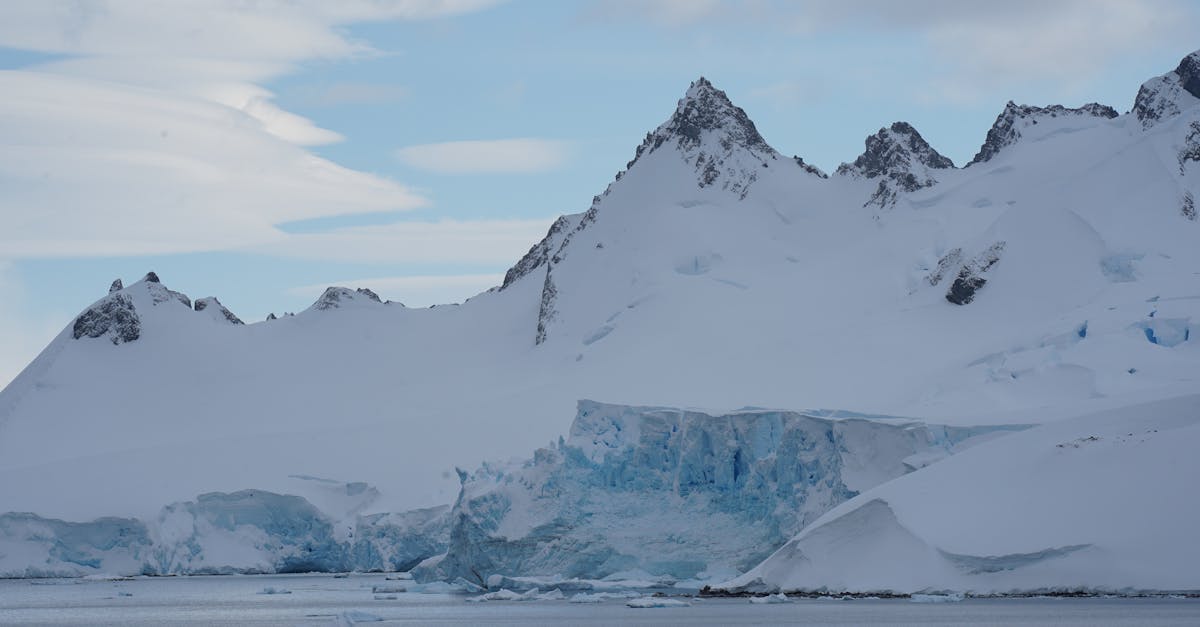
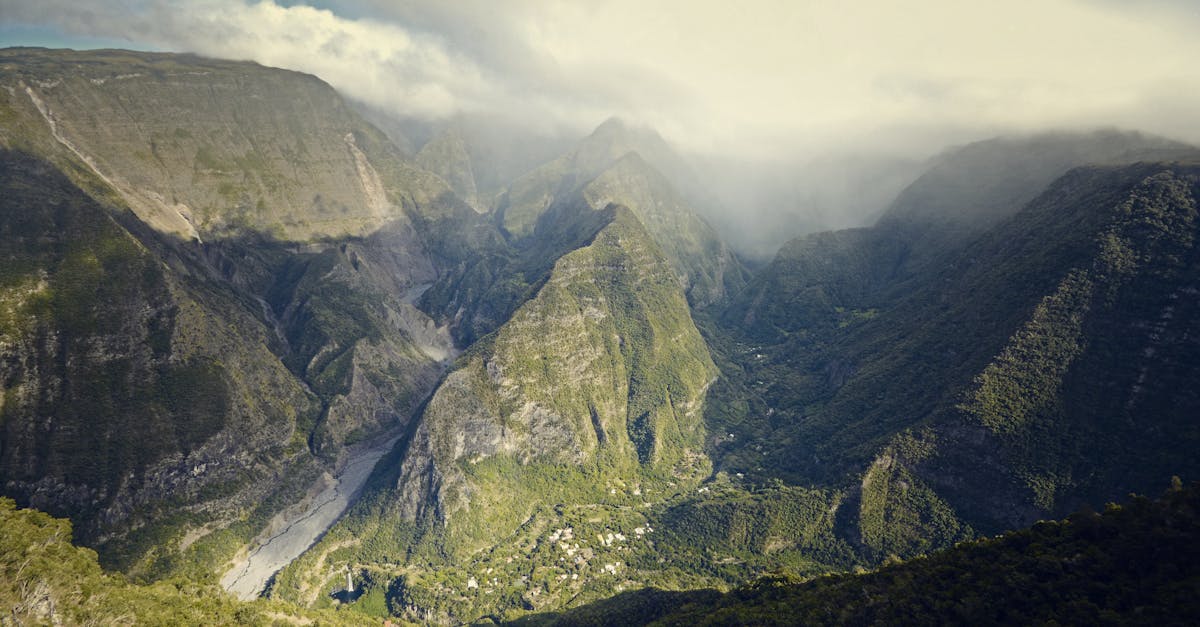


Photos: Ham Chitnupong, damien Saillet · Pexels
Can an Antarctic traveller work in Réunion?
We don't yet have a verified record for Antarctic travellers heading to Réunion for work. The links below take you straight to Réunion's embassy and official immigration portal — the authoritative answer lives there.
What it's like in Réunion
approximateDifficulty
—
No dataProcessing
—
StrongPR pathway
Limited
WeakAvg salary
—
OECD-style average wages, USD
No dataCost of living
—
No dataTop tax rate
—
No dataHealthcare
—
No dataSafety
—
No dataEnglish proficiency
—
No dataSome indicators for Réunion haven't been curated yet — we'll fill them in as we expand coverage.
Work visas have major life consequences.
Long-stay visa decisions affect your right to live, work, study, or remain with family. Always verify with a qualified immigration adviser or the destination's embassy before making travel, employment, or relocation decisions.
Work from Antarctic to Réunion
We don't have a structured visa record for this exact route yet. Until we do, the authoritative answer lives on Réunion's government portal — linked below. Look for the work permit / employment visa section.
3. General travel-advisory dashboards for Réunion
The four major English-language advisory services. They publish current safety guidance independently of visa policy and update on a rolling basis.
Application prep, advice & sources
Step-by-step checklist, when to hire a lawyer, alternative routes, related country pairs, and the official primary sources behind every claim above.
▾
Application prep, advice & sources
Step-by-step checklist, when to hire a lawyer, alternative routes, related country pairs, and the official primary sources behind every claim above.
What you'll need
Work visa for Réunion
Specific to Antarctic passport holders.
Start ~0–13 weeks before your intended travel date.
Order these first — they have the longest lead time
Employer sponsorship / CoS
Purpose evidence2–13 weeksA Certificate of Sponsorship (UK), Labour Market Impact Assessment (Canada), Form I-129 (US H-1B), or equivalent. The sponsor obtains this; you receive a reference number.
How: Your employer applies to the destination's immigration authority. You can't start without their reference number.
Police certificate
Background2–12 weeksA criminal-record clearance from every country you've lived in for 6+ months in the past 10 years. Universally required for work, study, family and PR routes.
How: FBI Channeler (US), ACRO (UK), AFP National Police Check (AU), state police of each country lived in.
Education credentials evaluation
Credentials4–12 weeksWES (Canada/US), ECE, IQAS, UK ENIC, or the destination's local equivalent — converts your foreign degree to the local framework.
How: Order online; allow 4–10 weeks. Request your university to send transcripts directly to the assessor.
English- / language-proficiency test
Credentials3–9 weeksIELTS, TOEFL, PTE, DELE, TestDaF, JLPT — depending on the destination. Most have minimum scores per visa class.
How: Book on the test provider's site. Test slots typically 2–4 weeks out; results 5–15 days after the test.
Valid passport
Identity2–8 weeksMost countries require your passport to be valid for at least six months beyond your departure date, with two or more blank pages.
How: Renew via your own country's passport office if expiring within 12 months.
Medical examination
Medical1–4 weeksConducted by a panel physician approved by the destination's immigration authority. Includes chest X-ray, blood tests, and an interview.
How: Book directly with a panel physician — find them on the destination's immigration website.
Apostille / certified document copies
Credentials1–4 weeksHague Apostille on civil documents (birth, marriage, education certificates) for countries that recognise the convention. Other countries require consular legalisation instead.
How: US: state Secretary of State or US State Dept. UK: FCDO Legalisation Office. Other: ministry of foreign affairs of the issuing country.
Then gather these
Biometrics (fingerprints + photo)
Background1–4 weeksCaptured at a Visa Application Centre (VFS, BLS, TLScontact). Walk-in is rarely possible — appointment slots fill up.
How: Book on the VAC website after submitting your online application.
CV / résumé and work history
Purpose evidence1–3 weeksUp-to-date résumé covering at least your last 10 years of employment. Some routes (Canada Express Entry, Australia points) require reference letters with hours per week.
How: Self-prepared. Get reference letters from past employers on letterhead, signed.
Signed job offer
Purpose evidence0–2 weeksA signed contract or offer letter from a sponsoring employer. Required for every work-route visa worldwide.
How: Issued by the sponsoring employer once you've accepted.
Certified translation of documents
Credentials1–2 weeksIf your documents are not in the destination's official language, you may need a sworn or certified translator.
How: ATA-certified (US) / ITI-qualified (UK) translators, or a sworn translator registered with the destination's consulate.
Proof of funds (long-stay)
Financial1–2 weeksCountry-specific minimum savings — e.g. ~CAD 14,000 (Canada study/work permits, single applicant), ~£1,334/month + £8,000 reserve (UK family), proof of income for digital-nomad routes.
How: Bank statements going back 3–6 months, sometimes a sworn affidavit of support from a sponsor.
Passport-style photograph
Identity1–3 daysA recent biometric photo to the destination's specifications. Most consulates require their own dimensions, not your home country's.
How: Any high-street photo studio, or app-based services that meet ICAO 9303 spec.
Online visa application form
Application1–3 daysThe destination's online form (DS-160 for US, gov.uk for UK, IRCC portal for Canada, ImmiAccount for Australia, e-Visa portal for most others).
How: Apply directly on the destination government website — never via a third-party paid service.
Application fee payment
Application1 dayPayable to the destination government directly. Fees range from ~$25 (e-Visas) to $2,500+ (US EB-1).
How: Card payment on the destination's portal. Receipt required for the application.
Make your case
Tailored guidance — Antarctic applying for a work visa to Réunion
The same things a £1,000 immigration consultation would tell you — what evidenceRéunion's caseworkers actually weight, a personal-statement skeleton you can adapt to Réunion's framing, common mistakes that get antarctic applications refused, and when it's worth hiring a lawyer.
What caseworkers actually weight
- 1
Genuine job offer + employer sponsor compliance
The sponsor's track record matters as much as your CV. Caseworkers cross-check: is the company actually trading? Does the salary match Companies House / equivalent filings? Has the sponsor had prior refusals for similar roles? A blue-chip sponsor letterhead is worth more than a perfect personal statement.
- 2
Salary at or above the role's threshold
Like family routes, this is the binary first filter. Every skilled-worker visa publishes a minimum salary (or a 'prevailing wage' for that occupation) — Réunion's figure is in the visa details above. Genuine offers below threshold get refused before merit review, no matter how strong the rest of the application.
- 3
Qualifications matching the role
Caseworkers cross-reference the SOC / ANZSCO / NOC occupation code against your degree + work history. A computer science degree applying for an accountant role triggers genuineness questions. If you're switching fields, evidence the transferable skills carefully.
- 4
Maintenance funds + dependents
If the employer doesn't certify your living costs, you need to show Réunion's required maintenance savings in your own account — typically held for 28+ consecutive days before you apply. The exact amount varies by destination and family size; check the visa details above.
- 5
Police certificates + medicals (long-stay only)
Long-lead documents — always start these first. Some destinations (Australia, Canada) require medical from designated physicians, often booked 4-6 weeks out.
Personal-statement skeleton
Fill in each section with your own facts, dates, and details. The structure mirrors what caseworkers expect to find.
1. Your role in plain English
What is the job? What does the company do? What will YOUR specific responsibilities be? Use everyday language — a caseworker isn't going to know what 'iOS infrastructure engineer' means without context. 'I'll lead the team that maintains the company's iPhone app, used by 12 million customers' lands better.
2. Why YOU specifically
What does your CV say about your fit? Three years of relevant experience + a relevant degree + a recommendation from a prior senior beats five years of unrelated experience. Match your background to the occupation code.
3. Why this employer
How did you find them? Recruiter? Direct application? Were you headhunted? Are they in their industry's top 10? The 'genuine vacancy' test is the single most-failed item — a recruiter trail or competitive-application story signals legitimacy.
4. Your settlement plans
Are you bringing dependents? Where will you live (rented short-term, then own / company-provided)? Brief mention of your destination integration plans (kids' schools, healthcare, etc.) for Skilled Worker visas where settled status is the long-term goal.
Mistakes that cost real money
- Don't pay for priority processing unless you have a contract start date you genuinely can't move. Standard service is usually 2-6 weeks; priority gets you 1-2 weeks for a few hundred extra. Negotiate a flexible start with the employer instead.
- Many countries charge a separate health-system levy on work visas (UK Immigration Health Surcharge, AU Health Care Levy, etc.) that compounds annually — long-term planners get out faster by pursuing settlement / naturalisation when eligible rather than visa-stacking.
- For sponsor-paid fee schemes (most countries' employer-sponsored routes), the employer should pay all government fees. Accepting any reimbursement clawback is usually a refusal trigger AND a labour-law violation in Réunion.
- Sponsorship certificate fees are non-refundable. Get the offer in writing AND check the sponsor's licence is in good standing with Réunion's immigration authority before paying anything.
- If Réunion uses a points-based system, getting language test scores 1 band higher could be worth more than 10 points — IELTS 8.0 vs 7.0 changes invitation rounds materially. Re-take if it's tight.
DIY or hire a lawyer?
✓ DIY is fine if
- • Standard skilled-worker route at a major sponsor (FAANG, Big 4, NHS, etc.) with clean immigration history
- • Salary clearly above threshold, occupation clearly on the shortage / eligible list
- • Single applicant, no dependents
⚠ Get a specialist if
- • Multi-country tax residency or split-payroll arrangements
- • Sponsor compliance issues — recent license action, recent refusals on related roles
- • Switching visa categories from inside Réunion (e.g. student → skilled-worker switch-in-country)
- • Treaty Trader / Investor visas — investment-based routes have layered technicality and Réunion's rules change often
- • Recent refusal in your or your sponsor's history
- • Director / shareholder of the sponsoring company (genuineness test is harder)
Other visa types for this route
We also have data on these visa categories between AQ and RE.
Related routes
Compare other work-visa routes
Antarctic travellers going to…


Sources & references
Every link below is a primary government source. We aggregate; the source is the authority. If anything on this page disagrees with a link below, the link wins.
Relocation services
Everything else you'll need for Réunion
Sponsored cards earn us a small commission — it keeps the visa tool free. Official and informational links don't. Our commercial policy →
Travel insurance
All providers →Single-trip and pay-as-you-go cover for medical emergencies, evacuation, baggage, and trip cancellation. Important when your destination doesn't provide reciprocal healthcare and required for many embassy applications.
AXA Schengen
OfficialBuilt specifically for Schengen short-stay visa applications. Generates the certificate of insurance with the format consulates expect.
IATI Seguros
RecommendedSpanish-language and English travel insurance commonly accepted for Schengen embassy applications (€30,000+ medical coverage, no-deductible options).
World Nomads
RecommendedSingle-trip insurance with explicit adventure-sports coverage (climbing, scuba, motorbike). Strong on emergency medical and evacuation for off-grid destinations.
Sponsored
While you're sorting your trip to Réunion
We earn a small commission on bookings made via these links — it helps keep the visa tool free. The visa info above is independent of any partner. Our commercial policy →
Browse other destinations
Where can Antarctic passport holders go?
Other passports visiting Réunion
Who needs a visa for Réunion?
Informational only. A valid visa permits entry subject to officer discretion at the border. Always verify with the destination's embassy or official source before travel, employment, or relocation.